
Rotary Kiln Classification and Pricing: A Comprehensive Research Guide for 2026
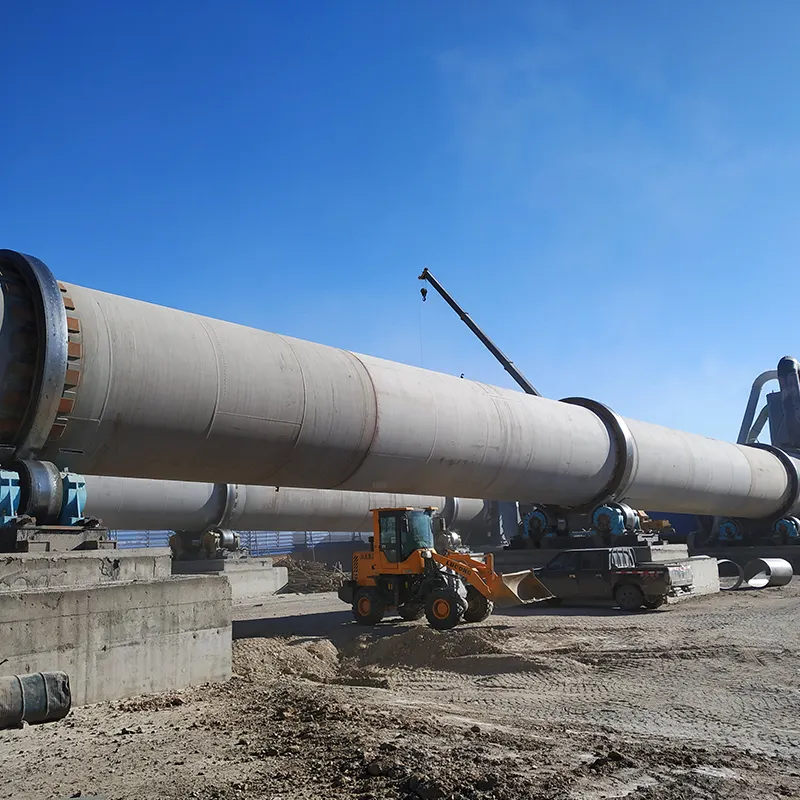
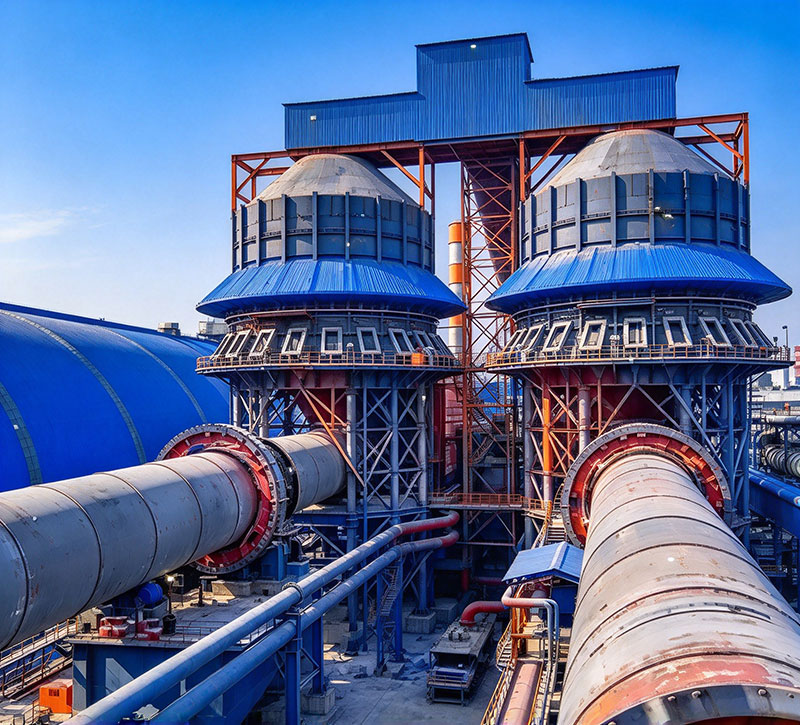
The rotary kiln is one of the most enduring and versatile pieces of industrial equipment in existence. First introduced in the late 19th century for cement manufacturing, it has since evolved into a cornerstone technology for industries spanning cement, lime, metallurgy, chemicals, environmental remediation, and waste processing . Today, rotary kilns operate in virtually every industrialized country, processing materials at temperatures ranging from 200 °C for low-temperature drying to over 1,450 °C for cement clinkerization and hazardous waste vitrification .
For buyers and engineers evaluating rotary kilns, two questions inevitably arise early in the procurement process: What type of rotary kiln do I need? and How much will it cost? The answers are more complex than they may appear. Rotary kilns are not standardized commodities — they span a wide range of configurations, sizes, and engineering approaches, each tailored to specific materials, temperatures, and production requirements . Pricing varies accordingly, and the relationship between purchase price and long-term operating cost is often counterintuitive .
This article provides a detailed, research-based examination of rotary kiln classification systems, the major types and their applications, the factors that determine pricing, and practical guidance for evaluating total cost of ownership. It is written for engineers, project managers, and procurement professionals who need a thorough understanding of the rotary kiln landscape before making an investment decision.
Part I: Rotary Kiln Classification
Rotary kilns can be classified along several dimensions — by process technology, heating method, application, and structural configuration. Understanding these classification systems is the first step in identifying the right kiln for a given project.
1.1 Classification by Process Technology
This is the most fundamental classification system, primarily used in the cement industry, and it describes how the raw material is prepared and fed into the kiln .
Wet-Process Kiln
In the wet process, the kiln feed enters the kiln in the form of a slurry with 30–40% moisture content. The wet-process kiln requires an additional dehydration zone to drive off the water, making it considerably longer than a dry-process kiln of the same diameter — with a typical length-to-diameter (L/D) ratio of 30:1 to 40:1 .
Advantages include more uniformly blended feed, lower dust losses, and suitability for raw materials with naturally high moisture content . However, the extra heat required to evaporate water results in significantly higher fuel consumption — theoretically and practically — compared to dry-process alternatives.
Wet-process kilns were once the dominant cement kiln type but have been largely phased out in new construction due to their high energy consumption. However, many remain in operation worldwide, particularly in regions with abundant natural moisture in raw materials.
Semidry-Process Kiln (Lepol / Grate Process Kiln)
The semidry process, also known as the Grate Process or Lepol Kiln, bridges the gap between wet and dry processing. In this system, pulverized dry kiln feed is first pelletized with 10–15% water addition, then the nodules are fed onto a traveling grate where they are partly calcined by the hot exit gases from the rotary kiln before entering the kiln itself .
The partly calcined material then falls into a rotary kiln that is only about one-third the usual length, since significant calcination has already occurred on the grate . This configuration offers fuel efficiency comparable to modern preheater kilns, and because the exit gases pass through the granular feed bed, Lepol kilns operate with much lower dust content in waste gases — a decisive environmental advantage over other preheater designs .
Grate process kilns remain advantageous in locations where raw material moisture is so high that it cannot be economically dried by kiln waste heat alone . A notable advantage is the uniform clinker size leaving the kiln, which is beneficial for downstream grinding. However, these kilns require careful attention to nodule production and feed bed thickness control, and they typically need additional labor for the granulator plant .
Modern grate rotary kilns are available in sizes ranging from φ1.4 × 33 m to φ3.2 × 50 m, with capacities from 0.9 t/h to over 42 t/h depending on the model and application .
Dry-Process Kiln
In the dry process, the kiln feed enters the kiln in dry powder form. Dry-process kilns share dimensional characteristics with wet kilns — they are long, with L/D ratios of approximately 30:1 to 35:1 . They operate with very high back-end temperatures and typically require water sprays at the feed end to cool exit gases before they enter the baghouse or precipitator .
Most dry-process kilns are equipped with chain sections at the feed end to transfer heat from the exhaust gases to the incoming feed. Gases enter the chains at approximately 800 °C and leave at around 450 °C, while the material enters at about 50 °C and emerges at 730 °C . These chain sections are a high-maintenance item but are essential for efficient operation. Neglecting chain maintenance often results in fuel cost increases that far exceed the savings from deferred maintenance .
A unique advantage of dry kilns is their suitability for cogeneration of electrical power, owing to the high exit-gas temperature. Several plants with dry kilns generate their own electricity, and many existing facilities are evaluating the feasibility of adding power generation rather than converting to preheater status .
Suspension Preheater Kiln (SP Kiln)
In the gas-suspension preheater kiln, dry feed is preheated and partly calcined by hot kiln exit gases in a tower of heat-exchange cyclones before entering the rotary kiln . While often perceived as a modern innovation, the concept dates back to a Czechoslovakian patent issued in the early 1930s — though the technology did not mature until German manufacturers overcame operational and structural challenges after World War II .
The most common design is the parallel four-stage preheater, capable of output rates up to 8,000 metric tons per day. Exit gas temperatures from the top stage are around 340 °C, and these waste gases are often used — together with clinker cooler exhaust — for drying and preheating feed in the raw grinding department .
One drawback of preheater kilns is the high concentration of volatile constituents (alkalies, sulfur, chlorides) in the exit gases, which cause frequent plugging problems at the lower cyclone stages and kiln inlet. For this reason, most suspension preheater kilns must be equipped with an alkali and sulfur bypass system to evacuate a percentage of exit gases . Such bypasses are necessary not only for operational stability but also to keep alkali content in the clinker below maximum permissible levels.
Suspension preheater kilns are among the most energy-efficient kiln types, operating with a specific fuel consumption of approximately 3,138 MJ/ton clinker (750 kcal/kg) .
Precalciner Kiln (NSP Kiln)
The precalciner concept emerged approximately 15 years after the suspension preheater, driven by Japanese cement manufacturers seeking to increase production rates without building ever-larger kilns . The precalciner is essentially a suspension preheater kiln equipped with a secondary firing system (flash furnace) attached to the lower stage of the preheater tower.
This innovation allowed kiln manufacturers to construct smaller-diameter kilns without sacrificing output — a precalciner produces 50–70% more clinker than a conventional preheater kiln of equal diameter . The total specific fuel consumption is approximately the same as a preheater kiln, but by burning 30–50% of the total energy input at the rear of the kiln, the heat load in the burning zone is reduced, producing a beneficial effect on refractory service life .
Additionally, the ability to use low-grade, cheaper fuels in the auxiliary firing unit results in a reduction of cost per unit weight of clinker — making the precalciner kiln economically advantageous even without fuel savings .
There are two configurations:
- Kilns with tertiary air ducts: Hot excess air from the clinker cooler is delivered to the precalciner via a duct running parallel to the kiln. These are more fuel-efficient but more complex to control (two independent combustion processes) and cannot use planetary coolers .
- Kilns without tertiary air ducts: Air for the precalciner comes from the kiln itself. These can be equipped with any cooler type, including planetary coolers, but tend to be less fuel-efficient when large bypass percentages are required .
The precalciner kiln is the dominant kiln type for new cement plant construction worldwide today, with production capacities ranging from 1,000 TPD to over 12,000 TPD .
1.2 Classification by Heating Method
Beyond process technology, rotary kilns are classified by how heat is delivered to the material :
Direct-fired kilns are the most common type and offer the highest thermal efficiency for most applications. Indirect-fired kilns are used when direct flame contact would contaminate the product, create a fire/explosion hazard, or when the evolved gases need to be collected separately for recovery or treatment .
1.3 Classification by Application
Rotary kilns serve a remarkably diverse range of industries and materials:
This diversity reflects the rotary kiln's fundamental versatility — its ability to provide continuous, high-temperature processing with flexible residence time and atmosphere control .
Part II: Rotary Kiln Pricing — Factors, Ranges, and Total Cost of Ownership
2.1 Factors That Influence Rotary Kiln Price
Rotary kiln pricing is not determined by a single variable. It is the result of a complex interaction of multiple engineering, material, and market factors . Understanding these factors is essential for evaluating quotations and avoiding costly procurement mistakes.
Kiln Size and Capacity
This is the most obvious price driver. A larger kiln requires more steel plate, larger castings (girth gear, tires), heavier structural supports, and more powerful drive systems. Kiln dimensions (diameter × length) directly correlate with capacity, and capacity drives price. A φ1.4 × 33 m kiln and a φ3.2 × 50 m kiln are fundamentally different machines in every dimension of cost .
Material Quality and Specifications
The quality of raw materials used in kiln fabrication significantly affects price:
- Shell plate grade: Q235B vs. Q345B vs. ASTM A516 Gr.70 — higher-grade steel costs more but offers better strength and temperature resistance
- Girth gear casting quality: Cast steel vs. cast iron; precision of tooth machining (AGMA or ISO quality class)
- Tire ring manufacturing: Forged vs. cast; forged tires are more expensive but offer superior fatigue resistance
- Refractory specification: Standard Mn13 manganese brick vs. premium Mn22Cr2 or magnesia-spinel brick — refractory can represent 25–35% of total lifecycle cost
Process Technology and Complexity
More sophisticated kiln systems cost more:
- A simple long dry kiln is less expensive than a precalciner system with cyclone preheater tower, calciner, and tertiary air duct
- Environmental systems (bag filters, scrubbers, SNCR, waste heat recovery) add significant cost but are increasingly required by regulations
- Advanced automation (DCS, expert control, kiln shell scanners) adds to the electrical and instrumentation scope
Application-Specific Engineering
Specialized applications require specialized engineering, which adds cost:
- Hazardous waste kilns require secondary combustion chambers, rapid quench systems, and acid gas scrubbing
- Zinc oxide kilns require oxidation settling chambers, surface coolers, and desulfurization towers
- Steel turnings calcination kilns require indirect heating, oil vapor recovery, and nitrogen inerting capability
- Indirect-fired kilns are inherently more expensive than direct-fired kilns due to the external heating jacket or tube design
Geographic and Market Factors
- Raw material costs (steel, castings) vary by region and market cycle
- Labor costs for manufacturing vary significantly between countries
- Shipping costs depend on kiln size, weight, destination port, and Incoterms
- Currency exchange rates affect international pricing
2.2 Typical Price Ranges
The following ranges are indicative and based on market data for rotary kilns manufactured in major production centers . Actual prices vary significantly based on the factors described above.
Cement Rotary Kilns
These prices typically cover the rotary kiln shell, girth gear, drive system, and support stations only — not the preheater, cooler, or environmental systems. A complete cement production line (from crushing to packing) can cost 5–10× the kiln shell price alone .
Lime Rotary Kilns
Metallurgical and Specialty Kilns
Important note: These ranges are indicative of equipment cost only and exclude civil works, installation, and commissioning. Total installed cost is typically 1.5–3× the equipment price, depending on project location and complexity .
2.3 Purchase Price vs. Total Cost of Ownership
One of the most critical — and most frequently overlooked — aspects of rotary kiln economics is the relationship between purchase price and total lifecycle cost . Research and industry experience consistently show that the initial equipment purchase price represents only a fraction of the total cost of owning and operating a rotary kiln over its 20–30 year service life.
Lifecycle Cost Breakdown
This breakdown reveals a fundamental insight: the cheapest kiln to buy is often the most expensive kiln to own . A lower purchase price frequently means thinner shell plates, lower-grade castings, undersized drives, or omitted features that lead to higher fuel consumption, shorter refractory life, more frequent breakdowns, and greater unplanned downtime over the kiln's operating life .
The Refractory Cost Factor
Refractory is the single largest recurring cost in rotary kiln operation, and it is where engineering decisions have the greatest long-term financial impact .
Research presented at UNITECR 2013 demonstrated that a dual-layer refractory design (working brick + insulating backup layer) can reduce external heat loss by 57.8% compared to a single-layer design in the same kiln — translating to annual energy savings of 870,000 Nm³ of natural gas (approximately $380,000 USD/year) in a case study on a 3.4-meter diameter kiln .
The study also found that:
- External heat loss in a single-layer design increases exponentially as the lining wears — a worn lining (reduced by 45 mm) increased heat loss by approximately 30%
- In a dual-layer design, the insulating layer is unaffected by wear, so external heat loss increases by only about 11% under equivalent wear conditions — approximately one-third the impact of the single-layer design
- The dual-layer lining also reduces kiln shell temperature significantly, resulting in better alignment, less thermal expansion (5.3 cm less linear expansion in the case study), less stress on the gear and bearings, and extended kiln structural life
These findings underscore the importance of evaluating refractory engineering — not just refractory price — when purchasing a rotary kiln. A supplier that specifies premium insulation and optimized layer design may charge more for the initial refractory package but deliver dramatically lower operating costs over the kiln's lifetime .
Energy Cost Considerations
Energy is the second-largest lifecycle cost, and it varies enormously between kiln types. The table below shows typical specific fuel consumption ranges for different kiln types in cement production:
At a fuel cost of 0.05perkcal,thedifferencebetweenawet−processkilnandaprecalcinerkilnrepresentsapproximately∗∗0.05perkcal,thedifferencebetweenawet−processkilnandaprecalcinerkilnrepresentsapproximately∗∗150,000–225,000 per year** for a 3,000 TPD plant. Over 20 years, this difference alone can exceed the entire purchase price of the kiln .
2.4 How to Get Accurate Pricing
Obtaining accurate rotary kiln pricing requires providing suppliers with detailed project specifications. A vague inquiry such as "I need a cement rotary kiln" will produce wildly inaccurate and unhelpful quotations .
Essential information to provide:
Tips for evaluating quotations:
- Always request a detailed equipment list — not a single-line price
- Compare quotations on a like-for-like basis — ensure all suppliers are quoting the same scope
- Ask for material test certificates and quality documentation to be included in the scope
- Request performance guarantees with defined test conditions and remedies for non-compliance
- Evaluate total cost of ownership, not just purchase price
- Visit the manufacturer's factory or request a live video walkthrough before placing an order
Part III: Market Outlook and Trends for 2026 and Beyond
The global rotary kiln market continues to evolve, driven by several macro trends :
Environmental regulations are tightening worldwide, requiring more sophisticated gas treatment systems — bag filters, SNCR/SCR, desulfurization, and waste heat recovery — as integral parts of kiln system design rather than optional add-ons. This increases system cost but also creates value through energy recovery and regulatory compliance .
Alternative fuel usage is accelerating, particularly in cement kilns, where refuse-derived fuel (RDF), biomass, and waste materials are increasingly substituting for fossil fuels. This trend favors precalciner kilns, which can flexibly fire multiple fuel streams .
Energy efficiency improvements continue to drive kiln technology evolution. Modern precalciner kilns operate at approximately 55% thermal efficiency, which some engineers believe is approaching the practical limit for this kiln concept . However, emerging concepts — including fluid bed reactors, separated calcination systems, and two-stage traveling-grate preheaters — may define the next generation of cement kiln technology .
Digitalization and automation are transforming kiln operations. DCS-based control, advanced process control (APC) using model-predictive algorithms, kiln shell temperature scanning, and real-time emissions monitoring are becoming standard features of modern kiln installations .
The circular economy is creating new rotary kiln applications in waste processing, resource recovery, and environmental remediation — from hazardous waste incineration and soil remediation to tire pyrolysis, fly ash vitrification, and spent catalyst regeneration .
Part IV: Complete Technical Parameters Reference
For buyers comparing specifications across manufacturers, the following reference table provides typical technical parameters for common rotary kiln sizes. These values are representative of modern grate and direct-fired rotary kilns :
| Product specifications(m) | Kiln dimensions | Capacity(t/d) | Rotation speed(r/min) | Motor power(kw) | Total weight(t) | Note | ||
| Diameter(m) | Length(m) | Obliquity(%) | ||||||
| Φ2.5×40 | 2.5 | 40 | 3.5 | 180 | 0.44-2.44 | 55 | 149.61 | Kiln with shaft cyclone preheater |
| Φ2.5×50 | 2.5 | 50 | 3 | 200 | 0.62-1.86 | 55 | 187.37 | ---- |
| Φ2.5×54 | 2.5 | 54 | 3.5 | 204 | 0.48-1.45 | 55 | 196.29 | ---- |
| Φ2.7×42 | 2.7 | 42 | 3.5 | 320 | 0.10-1.52 | 55 | 198.5 | ---- |
| Φ2.8×44 | 2.8 | 44 | 3.5 | 400 | 0.437-2.18 | 55 | 201.58 | Outside disassemble kiln |
| Φ3.0×45 | 3 | 45 | 3.5 | 500 | 0.5-2.47 | 75 | 210.94 | ---- |
| Φ3.0×48 | 3 | 48 | 3.5 | 700 | 0.6-3.48 | 100 | 237 | Outside disassemble kiln |
| Φ3.0×60 | 3 | 60 | 3.5 | 300 | 0.3-2 | 100 | 310 | Alumyte-alumina forge kiln |
| Φ3.2×50 | 3.2 | 50 | 4 | 1000 | 0.6-3 | 125 | 278 | Outside disassemble kiln |
| Φ3.3×52 | 3.3 | 52 | 3.5 | 1300 | 0.266-2.66 | 125 | 283 | Kiln with preheater precalcine |
| Φ3.5×54 | 3.5 | 54 | 3.5 | 1500 | 0.55-3.4 | 220 | 363 | Kiln with preheater precalcine |
| Φ3.6×70 | 3.6 | 70 | 3.5 | 1800 | 0.25-1.25 | 125 | 419 | Generating kiln for using ofterheat |
| Φ4.0×56 | 4 | 56 | 4 | 2300 | 0.41-4.07 | 315 | 456 | Kiln with preheater precalcine |
| Φ4.0×60 | 4 | 60 | 3.5 | 2500 | 0.396-3.96 | 315 | 510 | Kiln with preheater precalcine |
| Φ4.2×60 | 4.2 | 60 | 4 | 2750 | 0.4-3.98 | 375 | 633 | Kiln with preheater precalcine |
| Φ4.3×60 | 4.3 | 60 | 3.5 | 3200 | 0.396-3.96 | 375 | 583 | Kiln with preheater precalcine |
| Φ4.5×66 | 4.5 | 66 | 3.5 | 4000 | 0.41-4.1 | 560 | 710.4 | Kiln with preheater precalcine |
| Φ4.7×74 | 4.7 | 74 | 4 | 4500 | 0.35-4 | 630 | 849 | Kiln with preheater precalcine |
| Φ4.8×74 | 4.8 | 74 | 4 | 5000 | 0.396-3.96 | 630 | 899 | Kiln with preheater precalcine |
| Φ5.0×74 | 5 | 74 | 4 | 6000 | 0.35-4 | 710 | 944 | Kiln with preheater precalcine |
| Φ5.6×87 | 5.6 | 87 | 4 | 8000 | Max4.23 | 800 | 1265 | Kiln with preheater precalcine |
| Φ6.0×95 | 6 | 95 | 4 | 10000 | Max5 | 950×2 | 1659 | Kiln with preheater precalcine |
Note: Capacity values vary significantly based on material type, feed size, moisture content, and product specifications. Always request application-specific capacity data from the manufacturer.
Summary: Choosing the Right Rotary Kiln
The rotary kiln market offers a wide spectrum of options — from compact, single-purpose units for small-scale operations to massive, fully integrated production lines for industrial-scale manufacturing. The key to a successful investment lies in matching the kiln type, size, and engineering to the specific application requirements, and evaluating the total cost of ownership rather than the purchase price alone .
Decision Factor Key Consideration
Kiln type Match to your material, temperature, and process requirements
Size and capacity Plan for 10–15% headroom above current needs
Heating method Direct-fired for most applications; indirect-fired for hazardous or oxygen-sensitive materials
Refractory engineering Dual-layer design for energy savings; specify premium materials for abrasive or corrosive environments
Environmental systems Integrate from the design stage — not as an afterthought
Total cost of ownership Evaluate 20-year lifecycle cost, not just purchase price
Supplier capability In-house manufacturing, engineering depth, track record, and after-sales support
Why Choose Henan Hongke Machinery?
Henan Hongke Heavy Machinery Co., Ltd., based in Henan Province, China, manufactures a complete range of rotary kilns for cement, lime, magnesium, zinc oxide, metallurgical, and environmental applications. The company's production facility is equipped with heavy plate rolling machines, CNC machining centers, submerged-arc welding stations, and comprehensive quality control laboratories — enabling complete in-house manufacturing of all major kiln components including shells, girth gears, tire rings, and support stations .
What we offer:
Full kiln range — from φ1.4 m to φ3.2 m+ across all major application types
Application-specific engineering — every kiln tailored to the client's material, fuel, capacity, and regulatory requirements
Competitive pricing — leveraging Henan's mature industrial supply chain for cost-effective manufacturing without compromising quality
Complete system supply — from raw material handling through kiln, cooling, gas treatment, and product storage
Global project experience — installations across Asia, Africa, the Middle East, and South America
5–10 year warranty on structural components, with free replacement of defective parts in the first year
After-sales support — installation supervision, commissioning, operator training, and ongoing technical assistance
Need help selecting the right rotary kiln for your project? Contact us with your material type, capacity, and product requirements — our engineering team will recommend the optimal solution.