
Key Considerations When Purchasing a Cement Rotary Kiln: What Every Buyer Should Know
Introduction
Investing in a cement rotary kiln is one of the most consequential decisions a cement producer will ever make. The kiln is not just a piece of equipment — it is the production heart of the entire plant. Its quality, design, and reliability will determine your output, energy costs, maintenance expenses, and ultimately your profitability for the next two to three decades.
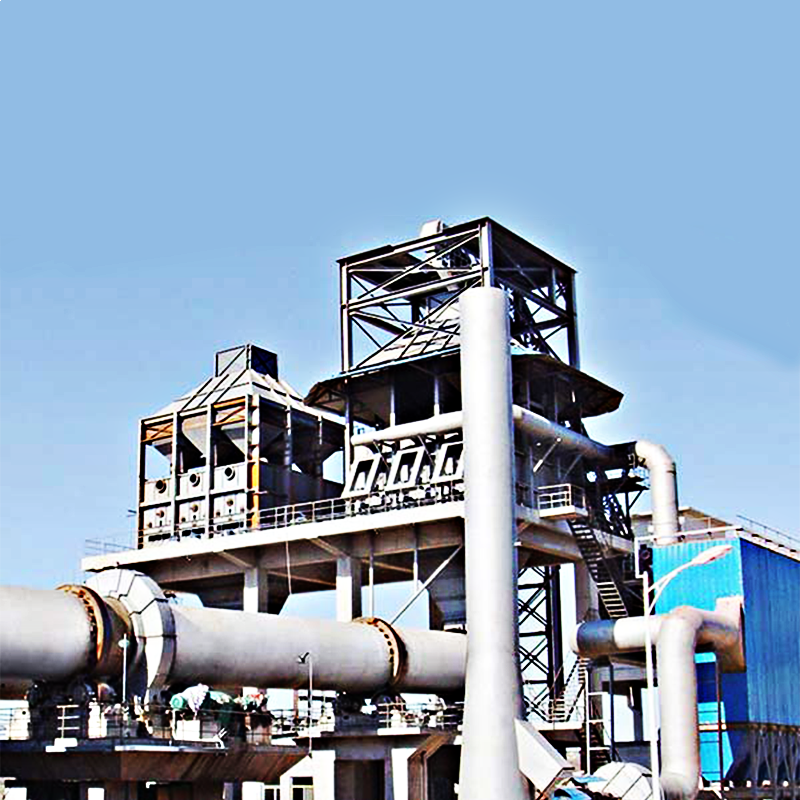
Yet many buyers, especially those purchasing a rotary kiln for the first time or sourcing internationally for the first time, underestimate the complexity of the procurement process. A kiln is not a commodity that can be selected from a catalog. Every detail — from shell plate thickness to girth gear tooth profile, from refractory specification to environmental system integration — matters.
This article outlines the most important considerations you should keep in mind when purchasing a cement rotary kiln, based on our years of experience serving clients worldwide.
1. Verify the Manufacturer's Actual Production Capability
This is the single most important step in your procurement process, and it is the one most frequently skipped by buyers who rely solely on website descriptions and email quotations.
What to check:
- Does the manufacturer own a factory, or is it a trading company? Many suppliers in the market present themselves as manufacturers but are actually intermediaries. Ask for a factory registration certificate, photos of the production facility, and — ideally — schedule a video call or in-person visit to confirm that the factory physically exists and is operational.
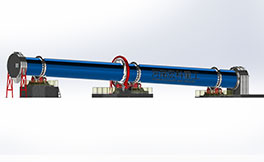
- Can they fabricate critical components in-house? A rotary kiln consists of several large, precision-critical components: the kiln shell, girth gear, tire rings, trunnion rollers, and drive system. A qualified manufacturer should have the capability to roll steel plates into large-diameter shells, cast and machine girth gears, and assemble support stations in its own workshops. If a supplier tells you they "outsource" the girth gear or shell fabrication, treat this as a yellow flag — it means they do not control the quality of the most critical components.
- What heavy equipment is in their workshop? Look for plate rolling machines capable of handling your kiln's shell diameter, CNC boring and milling machines for gear finishing, large-capacity overhead cranes, submerged-arc welding machines, and stress-relief furnaces for post-weld heat treatment. These are not optional — they are fundamental requirements.
Recommendation: Always visit the manufacturer's factory before signing a contract. If a personal visit is not feasible, request a live video walkthrough of the production facility with real-time Q&A. Do not accept pre-recorded videos as proof.
2. Request Complete Technical Documentation Before Ordering
A qualified kiln manufacturer should be able to provide detailed technical documentation as part of the bidding and pre-contract phase — not after you have already placed the order.
Essential documents to request:
Red flag: If a supplier provides only a one-page quotation with a price and a few general parameters (kiln size, capacity, motor power) but no engineering documentation, it strongly suggests that no actual engineering has been done. You are not buying a product — you are buying an engineering solution. If there is no engineering, there is no solution.
3. Pay Close Attention to Kiln Shell Quality
The kiln shell is the largest and most visible component, yet many buyers do not know what to look for beyond diameter and length. Shell quality is determined by several factors that are not immediately obvious:
3.1 Plate Material and Quality
- The shell plates should be new steel from a recognized steel mill, not remelted or re-rolled scrap plate. Request mill certificates (material test certificates) for every plate used in your kiln shell, confirming chemical composition, tensile strength, yield strength, and impact toughness.
- Common steel grades for kiln shells include Q235B, Q345B, Q345C (Chinese standard) or ASTM A516 Grade 70, ASTM A537 Class 1 (American standard). Ensure the grade is appropriate for the operating temperature of each kiln zone.
3.2 Shell Thickness
- Shell thickness should vary along the kiln length — thicker in the burning zone (where thermal stress is highest) and thinner in the preheat zone. A manufacturer that proposes a uniform shell thickness for the entire kiln has either oversimplified the design or is not doing proper engineering.
- Always request a shell thickness calculation report showing the basis for the selected thicknesses — thermal analysis, mechanical stress analysis, and fatigue considerations.
3.3 Welding Quality
- Kiln shell longitudinal and circumferential welds are critical to structural integrity. The welding process should be submerged-arc welding (SAW) — not manual stick welding — for full-penetration longitudinal and circumferential seams.
- All major welds should undergo non-destructive testing (NDT) — ultrasonic testing (UT) at minimum, with radiographic testing (RT) for longitudinal seams on larger kilns. Request the NDT inspection reports as part of the delivery documentation.
- Post-weld heat treatment (PWHT) should be performed on the completed shell sections to relieve residual welding stresses and reduce the risk of stress corrosion cracking during operation.
3.4 Shell Ovality
- After fabrication, each shell section should be checked for ovality (deviation from a perfect circle). Excessive ovality causes uneven tire-to-shell contact, accelerated wear, and cyclic stress that leads to fatigue cracking. A reputable manufacturer will measure and document ovality for each shell section before shipment.
4. Insist on Proper Girth Gear and Pinion Specifications
The girth gear is the second most critical component after the shell. It is also one of the most expensive single components in the kiln system.
Key considerations:
- Material and casting quality: The girth gear should be manufactured from cast steel (not cast iron) with verified chemical composition and mechanical properties. Request a material test certificate and ultrasonic inspection report for the casting before machining begins.
- Tooth profile accuracy: The gear teeth should be machined to a recognized international quality class (e.g., AGMA Class 8 or better, or ISO 1328 Grade 6 or better). Poor tooth profile accuracy leads to uneven load distribution, excessive vibration, noise, and premature gear wear.
- Tooth hardness: The gear tooth surface should be induction-hardened or flame-hardened to achieve a specified surface hardness (typically HB 300–350 or HRC 45–55, depending on the design). Ask for hardness test results.
- Single vs. dual-pinion drive: For kilns above approximately 4,000–5,000 TPD, a dual-pinion drive is strongly recommended. It distributes the drive load across two motor-reducer-pinion assemblies, providing mechanical redundancy and smoother torque transmission. A single-pinion drive on a large kiln creates a single point of failure that can shut down your entire plant.
- Pinion material and hardness: The pinion should be made from forged alloy steel with surface hardness exceeding that of the girth gear teeth (to ensure the pinion wears first, as it is cheaper and easier to replace).
5. Evaluate the Support Station Design Carefully
The support stations — consisting of tire rings, trunnion rollers, base plates, and bearings — bear the entire weight of the rotating kiln shell, its refractory lining, and the material inside.
What to look for:
- Tire ring material: Should be forged or cast steel with verified mechanical properties. Forged tires are preferred for larger kilns due to superior grain structure and fatigue resistance.
- Tire mounting method: For kilns with shell diameter above approximately 3.5 m, a floating tire design (where the tire sits loosely on shell-mounted retaining rings, allowing differential thermal expansion) is standard and essential. A fixed-mounted tire on a large kiln will cause shell cracking due to thermal stress.
- Trunnion roller bearings: Should be bronze-bushed (not roller bearings) for the heavy loads and slow rotational speeds characteristic of rotary kilns. Verify that a water-cooling system is included for the bearing housings — this is critical in hot climates and for kilns operating at higher capacities.
- Thrust roller (retaining roller): Must be included to prevent axial migration of the kiln shell. Verify that it is hydraulically or mechanically adjustable for precise axial positioning.
- Lubrication system: An automatic centralized lubrication system for all bearings and roller surfaces should be included as standard equipment.
6. Do Not Overlook the Preheater and Cooler
A rotary kiln does not operate in isolation. Its performance is entirely dependent on the quality of the upstream preheater system and the downstream clinker cooler. A mismatched preheater or undersized cooler will bottleneck your entire plant, regardless of how well the kiln itself is designed.
Preheater considerations:
- The number of cyclone stages (typically 5 for modern plants) directly affects heat recovery and specific fuel consumption.
- The pre-calciner design must be matched to your fuel type — particularly if you plan to use alternative fuels.
- Cyclone pressure drop and collection efficiency determine both your fan power consumption and your raw material loss.
Cooler considerations:
- An undersized cooler cannot adequately cool the clinker, resulting in high clinker discharge temperature (>150 °C above ambient), reduced clinker grindability, and damage to downstream conveying equipment.
- Cooler grate plate quality and cooling fan capacity are often areas where low-cost suppliers cut corners to reduce price. Insist on seeing the cooler specification sheet with guaranteed clinker outlet temperature.
7. Refractory: The Hidden Cost Driver
Refractory lining is not usually included in the basic equipment supply scope of a rotary kiln, which means many buyers do not give it sufficient attention during the purchasing phase. This is a mistake.
Key points:
- Ask your kiln supplier for a complete refractory lining specification — not a generic recommendation, but a zone-by-zone plan that accounts for your specific raw material chemistry (alkali content, sulfur, chlorine) and fuel type.
- Burning zone refractory life is the primary determinant of your kiln's operating campaign length. Magnesia-spinel brick or magnesia-chrome brick are standard for the burning zone, but the exact grade and brick geometry must be specified based on your operating conditions.
- Discuss refractory brick quality and sourcing with your kiln supplier. Some suppliers can provide refractory as part of the project scope; others will recommend third-party refractory suppliers. Either approach is acceptable, but the refractory specification must come from the kiln supplier's process engineering team, not from a generic brick catalog.
- Refractory curing and initial heat-up procedures are critical to achieving the specified brick life. Ensure your kiln supplier provides a detailed heat-up curve and curing protocol, and that experienced supervision is available during the first refractory installation and kiln start-up.
8. Clarify the Exact Scope of Supply
Ambiguity in the scope of supply is one of the most common sources of disputes between kiln buyers and suppliers. Before signing a contract, you must have a crystal-clear understanding of what is included and what is not.
Items frequently disputed:
Recommendation: Demand a detailed equipment list with item-by-item scope of supply as a contract annex. A one-line description such as "cement rotary kiln system, 5,000 TPD" is not sufficient.
9. Understand the Guarantee and Performance Warranty
Every kiln purchase contract should include clear performance guarantees with defined test conditions and remedies for non-compliance.
Standard performance guarantees to include:
- Liquidated damages (LD) should be specified for failure to meet guaranteed parameters — typically a percentage of equipment price per percentage point of shortfall.
- Performance Acceptance Certificate (PAC) conditions should be clearly defined — what triggers formal acceptance, what constitutes a successful test run, and what happens if the test is not passed on the first attempt.
10. Plan for Installation and Commissioning from Day One
A rotary kiln is not a piece of equipment that can be simply dropped on a foundation and switched on. Installation requires careful alignment, precise measurement, and experienced supervision.
What to arrange before equipment arrives on site:
- Civil works and foundations must be completed to the manufacturer's specifications, with precise elevation and alignment tolerances for each support station foundation.
- Heavy-lift equipment (mobile cranes or crawler cranes) must be arranged for unloading and positioning heavy components — a single tire ring for a 5,000 TPD kiln can weigh 40–60 tons.
- Installation supervision: Your kiln supplier should provide experienced installation supervisors who will guide your local erection crew through the entire process — shell alignment, girth gear meshing, refractory installation, and heat-up.
- Commissioning and performance testing: Budget 4–8 weeks for commissioning, depending on plant size. This includes cold commissioning (mechanical checks, electrical checks, instrument calibration), hot commissioning (first fire, heat-up, feed introduction), and the performance guarantee test run.
Common installation problems to avoid:
- Foundation elevation errors causing excessive shell slope deviation
- Poor girth gear-to-pinion mesh alignment causing vibration and premature gear wear
- Inadequate refractory curing (rushing the heat-up) causing early brick failure
- Insufficient commissioning time — rushing to meet a deadline often results in a troubled start-up that costs more time and money than a properly planned commissioning
11. After-Sales Support: Think Long-Term
Your relationship with the kiln supplier does not end when the equipment is delivered. It begins.
Questions to ask before purchasing:
- What is the warranty period, and what does it cover?
- Does the supplier maintain a spare parts inventory for the equipment they have supplied? What is the typical lead time for critical spare parts (e.g., girth gear, pinion, tire ring)?
- Does the supplier offer remote technical support (via video call, remote monitoring access, or diagnostic assistance)?
- Can the supplier send service engineers to your site for annual maintenance, refractory supervision, or troubleshooting? What is the typical response time?
- Does the supplier offer a long-term service agreement (LTSA) covering periodic inspections, performance optimization, and spare parts planning?
A supplier that cannot clearly answer these questions is a supplier that will be difficult to reach when you need help the most.
12. Price vs. Total Cost of Ownership
Finally, and perhaps most importantly — do not make your purchasing decision based solely on the initial equipment price.
A low-price kiln may cost you more over its lifetime due to:
- Thinner shell plates requiring earlier replacement or repair
- Lower-grade castings leading to premature girth gear or tire failure
- Substandard welding causing shell cracking and unplanned shutdowns
- Undersized or poorly matched preheater and cooler reducing system capacity
- Lack of engineering depth leading to start-up problems and chronic operational issues
- Inadequate after-sales support leaving you without assistance when problems arise
Instead of comparing prices, compare the total cost of ownership over 20 years:
The kiln with the lowest purchase price is rarely the kiln with the lowest total cost. Invest in quality up front — it pays for itself many times over.
Summary: A Quick-Reference Checklist
Why Henan Hongke Heavy Industry?
Henan Hongke Heavy Industry Machinery Equipment Co., Ltd., headquartered in Henan Province — the heart of China's heavy machinery manufacturing industry — is a professional manufacturer of rotary kiln systems for cement, lime, and metallurgical applications.
We manufacture all major kiln components in-house — kiln shells, girth gears, tire rings, support stations, and drive systems — in our 80,000+ m² production facility equipped with heavy plate rolling machines, CNC machining centers, submerged-arc welding stations, and comprehensive quality control laboratories.
Our international engineering team provides complete process design, detailed technical documentation, and tailored equipment specifications for every project. From first inquiry through commissioning and beyond, we are committed to delivering reliable equipment, transparent communication, and responsive support.
We invite you to put us to the test. Request a technical proposal for your cement rotary kiln project and compare our engineering depth, manufacturing quality, and total value — not just our price.