
Market Outlook for Sludge Treatment Rotary Kilns: Global Demand Drivers and Equipment Selection Insights
Key Takeaways
Global sludge treatment is shifting from "end-of-pipe disposal" to "resource recovery." Rotary kilns are gaining share in municipal sludge incineration and co-processing because of their complete high-temperature harmlessness, wide material adaptability, and ability to co-process multiple waste streams. For equipment exporters targeting this market, understanding regional policy drivers and process preferences matters more than listing specs.
1. The Fundamental Picture: Volume Growing, Pathways Switching
Urbanization and tighter wastewater standards keep pushing sludge output up. Industry research puts the global sludge disposal industry chain at over USD 48 billion in 2026, growing at roughly 5.2% CAGR, with China alone accounting for 28% — over 62 million tonnes (at 80% moisture content).
More important is the structural shift in disposal pathways. Land application (fertilizer, soil amendment) currently takes 38% of global volume, building materials 29%, incineration for power 21%, and landfill just 12%. The EU revised its sludge land application directive in 2026, tightening heavy metal limits by 15%. China issued a three-year action plan in late 2025 requiring 95% harmless disposal rates for prefecture-level cities by 2028 and over 65% resource utilization. These signals mean landfill and low-grade land application are losing space — high-temperature harmless technologies will absorb the growing share.
On the equipment side, the global sludge incinerator market was valued at about USD 3.36 billion in 2024 and is projected to reach USD 5 billion by 2035, a CAGR of roughly 3.7%. Rotary kiln incinerators hold a stable position in both municipal and industrial sludge treatment due to their tolerance for moisture and composition fluctuations.
2. Where Rotary Kilns Fit in Sludge Processing
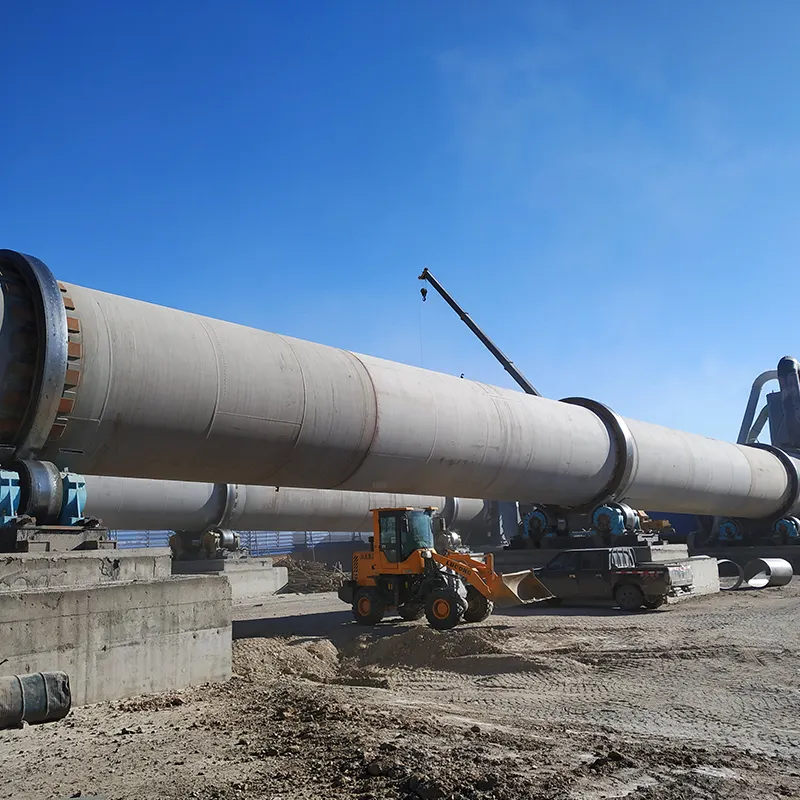
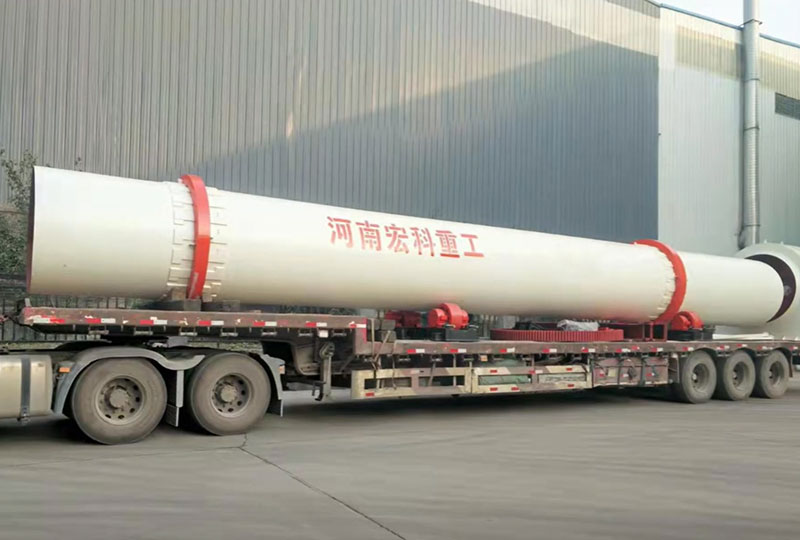
The core advantage of a rotary kiln is not "incineration" itself — it is process tolerance. Municipal sludge moisture typically fluctuates between 60–80%, and industrial sludge varies widely in organic content and heavy metal risk. This causes disposal price gaps of up to 40% between different sludge sources. Fluidized bed incinerators demand relatively uniform feed, while the rotary tumbling mechanism of a kiln can accommodate a certain range of moisture and calorific value fluctuations — reducing pretreatment complexity and cost.
In co-processing scenarios, the value multiplies. Ceramsite kiln co-processing has grown fast — using the high-temperature calcination of a ceramsite rotary kiln to simultaneously achieve harmless disposal and resource recovery of sludge, contaminated soil, and industrial residue. As of July 2026, the number of ceramsite kiln lines with co-processing capability globally exceeded 420, up about 68% from 2020. Single-line daily capacity has risen from early 30 t/d to the current mainstream 80–150 t/d. Municipal sludge accounts for an estimated 38.2% of this segment — the largest demand scenario.
For equipment suppliers, this means customers increasingly evaluate rotary kilns on "one kiln, multiple uses" flexibility — handling municipal sludge while adapting to industrial sludge or contaminated soil co-firing. On an independent website, highlighting material adaptability and co-processing capability reaches procurement decision-makers more effectively than emphasizing single-function incineration.
3. Regional Differences and Equipment Demand Characteristics
Policy environments and disposal cost structures drive differentiated rotary kiln demand across regions.
Europe operates under the highest technical value-added requirements due to the Emissions Trading System and Circular Economy Action Plan. EU ceramsite kiln co-processing demand is projected at 21 million tonnes in 2026, growing slowly but leading globally in secondary pollution control and energy recovery metrics. European customers have explicit requirements for tail gas emission control, heat recovery efficiency, and full-lifecycle carbon data. Research in Central Europe shows that although an EU-wide sludge management directive framework exists, enforcement varies significantly — Czechia and Slovakia enforce stricter microbial and heavy metal standards than EU minimums. Exporting to Europe requires verifiable compliance evidence in gas cleaning systems and automation control.
Asia-Pacific is the largest demand market — an estimated 48 million tonnes in 2026, or 41.7% of global volume — driven by tightening environmental regulations and infrastructure renewal in China, Japan, and Southeast Asia. China's market is distinctive: local government payment mechanisms and subsidy policies directly influence equipment selection. Under NDRC and MOHURD policy documents, qualifying sludge treatment projects can enjoy a 70% VAT refund (immediate levy, immediate refund), and central budget investment and local government special bonds support sludge harmless treatment and resource utilization facility construction. This means Chinese customers factor expected policy subsidies into their ROI models. A supplier who can help customers navigate applicable tax incentives and subsidy pathways gains a clear differentiation advantage in commercial negotiations.
Middle East, Africa, and Latin America together represent about 20 million tonnes — still an early-stage market. But growth potential deserves attention: in Latin America's circular water economy governance, insufficient financing channels and missing incentive mechanisms are identified as primary barriers to circular economy transition. In other words, these markets don't lack treatment demand — they lack payment capacity and project financing solutions. For suppliers with EPC or equipment leasing capabilities, first-mover advantage in emerging markets may offer better long-term value than price wars in mature markets.
4. Key Technical Considerations for Equipment Selection
From a procurement decision perspective, sludge treatment rotary kiln evaluation dimensions include:
Moisture adaptability: Can the kiln handle 60–80% moisture feed without excessive auxiliary fuel? Internal lifting flight design and counter-flow configuration are decisive.
Co-processing flexibility: Can the same kiln switch between municipal sludge, industrial sludge, and contaminated soil without major refractory or burner modifications?
Emission compliance evidence: Does the supplier provide third-party test reports for dioxin, heavy metals, and NOx under actual load — not just design calculations?
Heat recovery integration: Waste heat boiler or air preheater compatibility directly affects operating cost per tonne of sludge.
Full-load test documentation: A thermal imaging report and fuel consumption test from a loaded run before shipment is the most credible proof of performance.
5. Implications for Export Marketing
For independent website SEO and foreign trade lead generation, the content that converts is not "we are a professional rotary kiln manufacturer." It is specific, verifiable, and regionally relevant:
Publish regional policy analyses (EU sludge directive changes, China subsidy pathways, Southeast Asia infrastructure plans) to attract procurement managers searching for compliance guidance.
Provide co-processing case data (ceramsite kiln line capacity, municipal sludge blending ratios, emission test results) to demonstrate technical depth.
Offer downloadable selection tools (moisture adaptability charts, fuel consumption calculation sheets, ROI models with subsidy scenarios) to capture leads.
Use full-load test reports and thermal imaging data as trust assets — engineers and procurement managers judge suppliers by evidence, not adjectives.
The sludge treatment rotary kiln market is not a "fast-growing, everyone wins" space. It rewards suppliers who understand regional policy logic, process adaptability, and verifiable performance data. For B2B export content, that understanding is the product.