
Rotary Kiln Applications in Environmental Engineering: A Comprehensive Guide
When most people think of rotary kilns, they think of cement plants or lime production. But in recent years, the rotary kiln has emerged as one of the most versatile and effective tools in environmental engineering — capable of treating, stabilizing, or destroying a wide range of hazardous and problematic waste streams that other technologies struggle to handle.
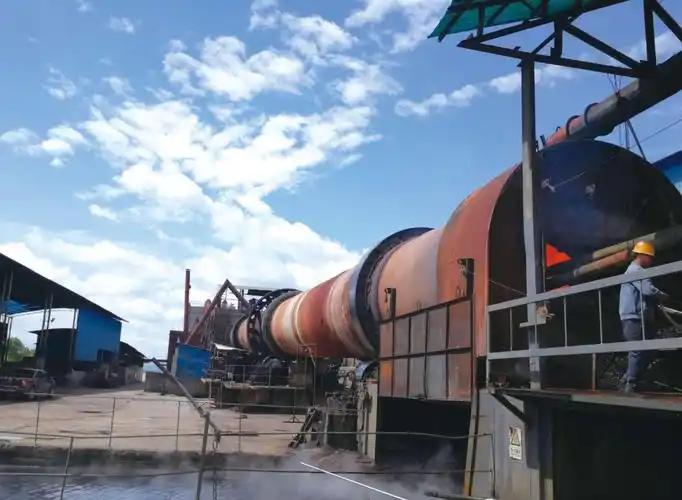
From contaminated soil remediation to hazardous waste incineration, from industrial sludge treatment to e-waste processing, the rotary kiln's unique combination of high temperatures, continuous operation, and flexible feed acceptance makes it an indispensable piece of equipment in the modern environmental engineer's toolkit.
This article provides a detailed overview of the major environmental applications of rotary kilns, explaining how each process works, what types of waste it addresses, and why the rotary kiln is often the technology of choice for these challenging tasks.
1. Hazardous Waste Incineration
The Challenge
Hazardous wastes — including chemical residues, expired pharmaceuticals, pesticide production waste, organic solvents, and contaminated packaging — require destruction at high temperatures to ensure complete decomposition of toxic compounds. In many countries, regulatory standards mandate that hazardous organic waste must be destroyed at temperatures above 1,100 °C with a minimum residence time, and that the destruction and removal efficiency (DRE) of principal organic hazardous constituents (POHCs) must exceed 99.99%.
How the Rotary Kiln Works
The rotary kiln is the primary thermal treatment unit in a rotary kiln incineration (RKI) system. Solid, semi-solid, and liquid hazardous wastes are fed into the elevated end of a slowly rotating, inclined kiln shell. As the waste travels through the kiln, it passes through two distinct zones:
- Drying and pyrolysis zone (400–800 °C): Moisture is driven off and organic compounds begin to thermally decompose in an oxygen-limited environment.
- Combustion zone (900–1,200 °C): Remaining organic material is fully oxidized with controlled air injection.
The hot combustion gases then pass through a secondary combustion chamber (SCC) maintained at 1,100–1,200 °C with a gas residence time of ≥ 2 seconds, ensuring complete destruction of any remaining hazardous compounds, including dioxins and furans.
The exhaust gas is subsequently treated through a rapid quench system (to prevent dioxin reformation), acid gas scrubbing, activated carbon injection, and a high-efficiency bag filter before stack discharge.
What It Treats
Why Rotary Kiln
- Accepts solid, liquid, and semi-solid wastes in the same unit
- High DRE (>99.99%) when properly operated with secondary combustion chamber
- Continuous operation for large waste volumes
- Rotary action provides constant agitation and mixing, ensuring uniform treatment
- Established technology with decades of regulatory acceptance worldwide
2. Contaminated Soil Remediation
The Challenge
Soil contamination from industrial spills, chemical plant operations, mining activities, and underground storage tank leaks is a widespread environmental problem. Contaminants include petroleum hydrocarbons, polycyclic aromatic hydrocarbons (PAHs), polychlorinated biphenyls (PCBs), heavy metals, pesticides, and volatile organic compounds (VOCs).
Contaminated soil cannot be left in place in many cases — it poses risks to groundwater, ecosystems, and human health. Excavation and off-site disposal is expensive and merely transfers the problem to a landfill.
How the Rotary Kiln Works
Thermal desorption using a rotary kiln is one of the most effective remediation technologies available. The contaminated soil is fed into the rotary kiln and heated to temperatures ranging from 300–600 °C (low-temperature thermal desorption) or 600–900 °C (high-temperature thermal desorption), depending on the contaminant type.
At these temperatures:
- VOCs and light hydrocarbons are vaporized at relatively low temperatures (300–500 °C)
- Heavy hydrocarbons, PAHs, and PCBs require higher temperatures (500–800 °C) for decomposition
- Mercury and certain volatile metals are driven off at 600–800 °C and captured in the gas treatment system
The cleaned soil exits the kiln, is cooled, and can be returned to the excavation site as clean backfill — eliminating disposal costs entirely. The vaporized contaminants are collected in the off-gas treatment system, which typically includes a cyclone, a thermal oxidizer (or afterburner), a quench tower, an acid gas scrubber, and a bag filter.
What It Treats
Why Rotary Kiln
- Treats large soil volumes continuously (50–200 t/h for large projects)
- Treated soil can be reused as backfill — no landfill disposal needed
- Effective against a wide range of organic contaminants
- Temperature and residence time are fully adjustable
- Proven technology used extensively in the United States, Europe, and increasingly in Asia
3. Industrial Sludge Treatment
The Challenge
Industrial sludge from chemical plants, refineries, electroplating operations, and wastewater treatment facilities contains a complex mixture of water, organic compounds, heavy metals, and fine solids. Wet sludge is expensive to transport, difficult to dewater mechanically, and often classified as hazardous waste requiring specialized disposal.
How the Rotary Kiln Works
Rotary kilns address industrial sludge through two complementary approaches:
Drying (200–500 °C): The rotary dryer reduces sludge moisture from 75–85% down to 20–30%, reducing volume by 60–75% and converting the sludge into a dry, handleable material suitable for incineration, solidification, or controlled landfill.
Incineration (800–1,100 °C): For hazardous sludge containing toxic organic compounds, the rotary kiln can fully incinerate the dried sludge at high temperatures, destroying organic contaminants and converting the residue to inert ash. The ash can often be solidified and landfilled at non-hazardous facilities.
Key Design Features
- Indirect heating option for sludge containing VOCs — prevents secondary pollution
- Internal flights optimized for cohesive, sticky sludge materials
- Corrosion-resistant lining (stainless steel) for chemically aggressive sludge
- Integrated off-gas treatment — condensation, scrubbing, and bag filtration
Why Rotary Kiln
- Handles the full moisture range from wet cake to dry powder
- Continuous operation — no batch cycle limitations
- Can combine drying and incineration in a two-stage system
- Tolerates variable feed composition
- Well-established in the chemical and petrochemical industries
4. Spent Catalyst Regeneration and Recovery
The Challenge
Catalysts used in petroleum refining, chemical synthesis, and automotive exhaust treatment (catalytic converters) gradually lose their activity and must be replaced. Spent catalysts often contain valuable metals — platinum, palladium, rhodium, vanadium, molybdenum, cobalt, and nickel — that are economically worth recovering. However, spent catalysts may also contain coke deposits, sulfur, and other contaminants that must be removed before the metals can be extracted.
How the Rotary Kiln Works
The rotary kiln is used in two stages of catalyst processing:
- 1.
Decoking and activation: The spent catalyst is heated in the rotary kiln at 400–700 °C to burn off coke deposits and adsorbed contaminants, restoring the catalyst substrate for re-impregnation with fresh active metals.
- 2.
Roasting for metal recovery: When catalyst regeneration is not feasible, the spent catalyst is roasted at 800–1,200 °C in the rotary kiln to convert the contained metals into oxide forms that can be leached, separated, and purified in downstream hydrometallurgical processes.
What It Treats
- Fluid catalytic cracking (FCC) catalysts from refineries
- Hydroprocessing catalysts (hydrotreating, hydrocracking)
- Automotive catalytic converter substrates
- Chemical synthesis catalysts
- SCR catalysts from power plants
Why Rotary Kiln
- Continuous processing of large catalyst volumes
- Precise temperature control for different catalyst types and metals
- Effective removal of coke, sulfur, and organic contaminants
- Established technology in the precious metals recovery industry
5. Municipal Solid Waste (MSW) and RDF Processing
The Challenge
Growing urban populations generate increasing volumes of municipal solid waste. Landfill space is becoming scarce and expensive, and open dumping causes severe environmental damage. Waste-to-energy technologies that convert MSW into useful heat or electricity are increasingly demanded by governments worldwide.
How the Rotary Kiln Works
Rotary kilns can process MSW and refuse-derived fuel (RDF) in two distinct modes:
Direct incineration: MSW is fed directly into the rotary kiln and burned at 850–1,100 °C. The heat recovered from the exhaust gas generates steam, which drives a turbine for electricity production. The residual bottom ash exits the kiln and can be processed for metal recovery and use as construction aggregate.
Pyrolysis and gasification: At lower temperatures (400–700 °C) and in an oxygen-limited environment, the rotary kiln can pyrolyze MSW or RDF to produce syngas (a combustible gas mixture of CO, H₂, and CH₄) and a solid char residue. The syngas can be burned for energy or used as a chemical feedstock.
Why Rotary Kiln
- Accepts mixed, unsorted waste — does not require precise feed preparation
- Continuous operation suitable for large waste volumes
- Rotary action breaks up and mixes the waste for uniform treatment
- Can handle high-moisture waste with integrated drying
- Dual capability: direct incineration or pyrolysis/gasification
- Bottom ash is inert and can be beneficially reused
6. Scrap Tire and Rubber Waste Processing
The Challenge
Globally, over one billion waste tires are generated each year. Tires are non-biodegradable, take up enormous landfill space, and pose serious fire hazards. Whole tires are banned from landfills in many jurisdictions.
How the Rotary Kiln Works
The rotary kiln is used for pyrolysis of waste tires — heating them in an oxygen-free or oxygen-limited environment at 400–700 °C. This thermally decomposes the rubber into:
- Pyrolysis oil (35–45% by weight) — usable as industrial fuel or as a feedstock for chemical production
- Recovered carbon black (30–35%) — can be reprocessed for use in rubber manufacturing, inks, or construction materials
- Steel wire (10–15%) — recovered from the tire reinforcement and sold as scrap metal
- Syngas (10–15%) — combustible gas that can be used to fuel the pyrolysis process itself, reducing external energy input
Why Rotary Kiln
- Continuous processing — much higher throughput than batch pyrolysis reactors
- Self-sustaining energy balance (syngas fueling reduces external fuel needs)
- Recovers all four value streams from the tire
- Environmentally superior to landfilling or open burning
- Growing global demand for tire pyrolysis technology
7. Fly Ash and Incineration Residue Treatment
The Challenge
Fly ash collected from waste incineration plants, coal-fired power stations, and industrial boilers often contains heavy metals (lead, cadmium, zinc, mercury) and other hazardous components. In many countries, fly ash from waste incineration is classified as hazardous waste and requires stabilization or thermal treatment before landfill disposal.
How the Rotary Kiln Works
The rotary kiln treats fly ash through vitrification or thermal stabilization:
- At temperatures of 1,200–1,450 °C, the fly ash is melted and converted into a glass-like slag (vitrification). This slag is chemically inert — heavy metals are locked within the glass matrix and cannot leach into the environment. The vitrified slag can be used as construction aggregate.
- At lower temperatures (800–1,100 °C), volatile heavy metals (mercury, cadmium, lead, zinc) are selectively driven off from the fly ash and captured as concentrated residues in the gas treatment system, allowing recovery of these valuable metals while rendering the remaining ash non-hazardous.
Why Rotary Kiln
- Achieves complete immobilization of heavy metals in vitrified slag
- Selective volatilization enables metal recovery (zinc, lead, cadmium)
- Reduces hazardous waste volume by 50–70%
- Transforms a disposal liability into a reusable construction material
- Established technology in Japan, Europe, and increasingly in China
8. Oil Sludge and Petroleum Waste Treatment
The Challenge
Oil sludge — generated by tank cleaning, oil-water separators, refinery operations, and drilling activities — is a hazardous waste containing petroleum hydrocarbons, water, and solids. It is classified as hazardous in most countries and requires specialized treatment.
How the Rotary Kiln Works
Oil sludge is treated in the rotary kiln through thermal desorption at 300–600 °C:
- 1.Water is evaporated
- 2.Petroleum hydrocarbons are vaporized and collected as recoverable oil
- 3.The cleaned solid residue meets non-hazardous disposal criteria
The recovered oil has economic value — it can be recycled to the refinery or used as industrial fuel, offsetting treatment costs.
Why Rotary Kiln
- Recovers valuable petroleum from waste
- Treated solids can often be disposed of as non-hazardous waste
- Continuous operation for large volumes
- Combined drying and desorption in a single unit
Summary: Rotary Kiln Environmental Applications at a Glance
Why Choose Henan Hongke Machinery for Environmental Rotary Kiln Projects?
At Henan Hongke Heavy Machinery Co., Ltd., we design and manufacture rotary kiln systems specifically engineered for environmental applications. Our capabilities include:
- Application-specific engineering — every kiln is designed for the client's specific waste type, contaminant profile, and regulatory requirements
- Complete system design — not just the kiln, but the full thermal treatment system including feed handling, off-gas treatment, and residue management
- In-house manufacturing — all major components fabricated and machined in our own facility with full quality control
- Indirect heating expertise — specialized designs for applications requiring oil recovery, VOC control, or fire/explosion prevention
- Integrated environmental systems — bag filters, scrubbers, condensation units, and activated carbon systems designed and supplied as part of the package
- Global project experience — environmental rotary kiln installations across Asia, Africa, and the Middle East