
Lime Rotary Kiln Projects by Henan Hongke: Equipment Configurations and Verified Results
Henan Hongke Heavy Machinery Co., Ltd. provides lime rotary kiln equipment and lime production line solutions for industrial projects with different production capacity requirements. Our project portfolio includes lime kiln applications in China, the Philippines, and Mongolia, covering project capacities from 50 TPD to 1,000 TPD.
These projects involve different plant layouts, limestone handling requirements, material conveying systems, kiln configurations, cooling arrangements, dust collection equipment, and control systems. The final equipment configuration depends on the required output, limestone characteristics, fuel conditions, site layout, environmental requirements, and contractual technical specifications.
This article introduces representative lime rotary kiln projects associated with Henan Hongke, outlines the main equipment used in a lime production line, and explains the operating and acceptance information that buyers should review when evaluating a lime kiln supplier.
1. Overview of Henan Hongke Lime Rotary Kiln Projects
Henan Hongke's lime rotary kiln project portfolio includes projects with different capacities and installation locations. The following examples illustrate the range of project requirements handled by the company.
Representative Project Portfolio
| Project | Location | Project Capacity or Specification |
|---|---|---|
| 300 TPD Lime Kiln Project | Qingyuan, Guangdong, China | 300 tons per day |
| 800 TPD Lime Rotary Kiln Production Line | Shaanxi, China | 800 tons per day |
| 1,000 TPD Lime Rotary Kiln Project | Changzhi, Shanxi, China | 1,000 tons per day |
| 80 TPD Lime Rotary Kiln Project | Fumin County, Yunnan, China | 80 tons per day |
| Environmentally Friendly Lime Rotary Kiln Project | The Philippines | Project-specific configuration |
| Mongolia Φ2.2 × 42 m Lime Rotary Kiln Project | Mongolia | 50 tons per day; kiln specification Φ2.2 × 42 m |
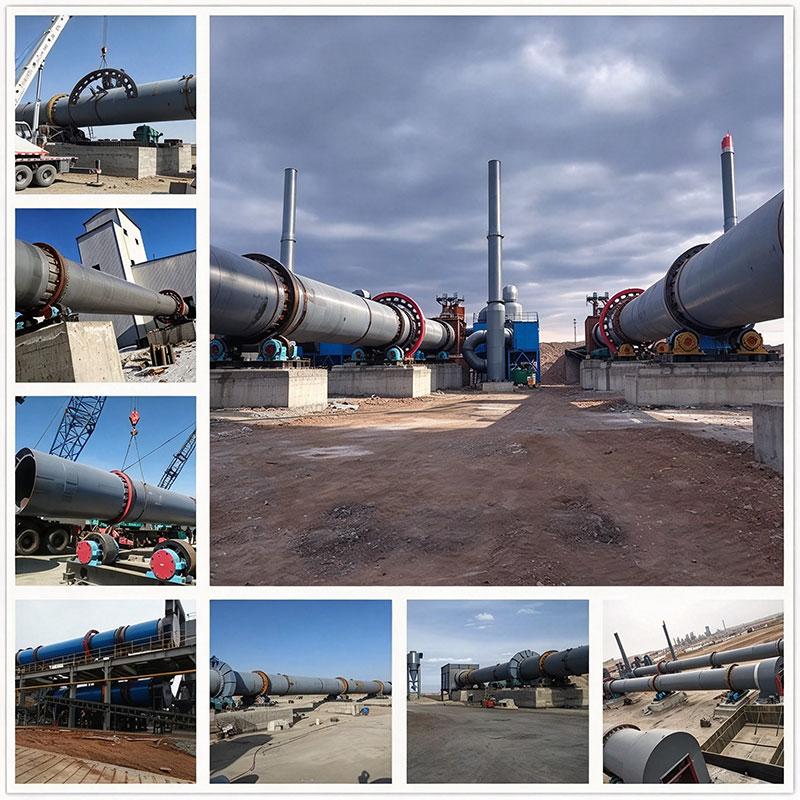
Project capacity and equipment specifications should be read in the context of each project's contractual scope. Actual production output and finished lime quality depend on limestone properties, fuel, operating conditions, system configuration, and the agreed product specifications.
For detailed project verification, buyers should review available site photographs, equipment nameplates, delivery records, commissioning documentation, and acceptance records where applicable.
2. 300 TPD Lime Kiln Project in Qingyuan, Guangdong, China
The 300 TPD lime kiln project in Qingyuan, Guangdong, is one of the representative projects in Henan Hongke's lime kiln portfolio. Its stated production capacity is 300 tons per day.
A lime production line at this capacity requires coordination between limestone preparation, controlled feeding, kiln operation, finished-lime cooling, dust collection, and material conveying. The equipment layout should be designed to maintain a continuous material flow while providing suitable access for inspection and maintenance.
Key Engineering Considerations
Raw material preparation: Limestone size and feed consistency must meet the requirements of the selected kiln process.
Feeding and conveying: Feeding equipment and conveyors should deliver material at a controlled rate.
Kiln operation: The rotary kiln must operate within the process conditions established for the raw material and target lime quality.
Cooling and collection: The cooling system and dust collection equipment should be matched to the production process and site requirements.
Operation and maintenance: The layout should allow routine inspection of drive components, supporting rollers, seals, and other critical parts.
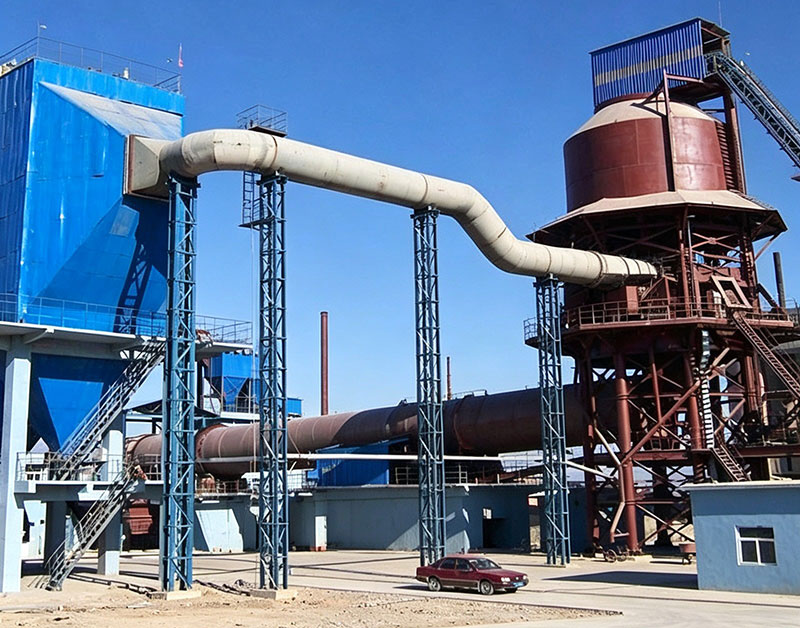
For a meaningful assessment, buyers should confirm the project's actual commissioning date, sustained operating output, finished lime quality, and acceptance status from the relevant project records rather than relying on nominal capacity alone.
3. 800 TPD Lime Rotary Kiln Production Line in Shaanxi, China
The 800 TPD lime rotary kiln production line project in Shaanxi represents a larger-capacity application. At this production scale, equipment sizing and coordination across the entire line become particularly important.
A production line must be evaluated as an integrated system, not simply as a rotary kiln supplied in isolation. Limestone preparation, feeding, conveying, kiln operation, cooling, dust collection, and control functions all contribute to overall production performance.
Equipment and System Coordination
For an 800 TPD project, the engineering review should consider:
Limestone handling capacity and feed consistency.
The relationship between feeding equipment and kiln throughput.
Kiln drive, support, sealing, and operating arrangements.
Cooling capacity and finished-lime conveying requirements.
Dust collection performance under the actual operating conditions.
Control system functions, operating alarms, and process monitoring.
Maintenance access and the availability of critical spare parts.
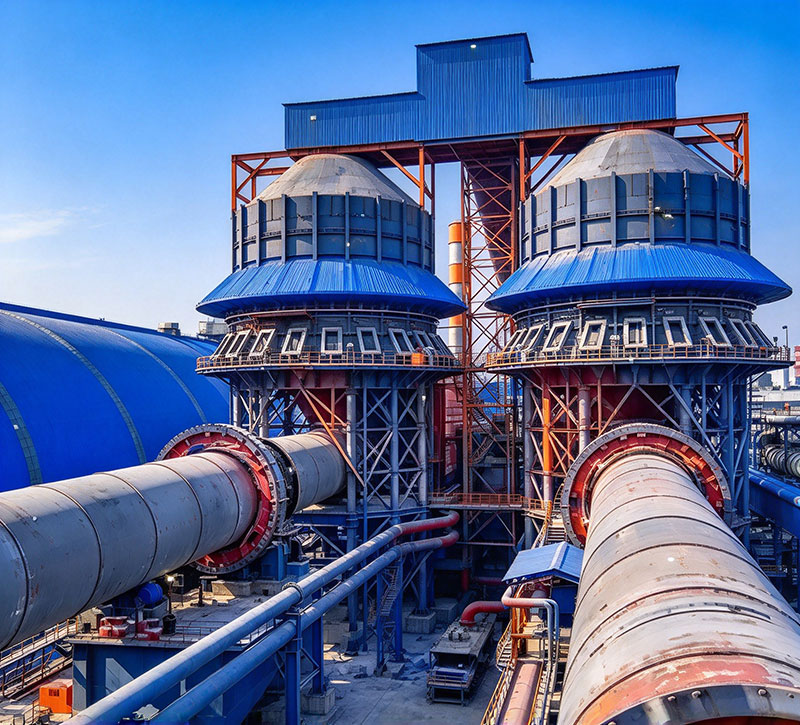
For a project of this scale, useful verification records may include the equipment list, approved technical specifications, commissioning report, production records, finished-product test results, and documented acceptance criteria.
The reported 800 TPD capacity should be distinguished from actual daily output achieved during a defined operating period. This distinction helps buyers make a more accurate comparison between suppliers.
4. 1,000 TPD Lime Rotary Kiln Project in Changzhi, Shanxi, China
The 1,000 TPD lime rotary kiln project in Changzhi, Shanxi, is a high-capacity project in Henan Hongke's project portfolio. Its stated capacity provides a reference point for buyers evaluating equipment and process requirements for large-scale lime production.
At this capacity, the performance of individual machines must be considered together with the availability and stability of the complete production line. Bottlenecks in raw material preparation, conveying, cooling, dust collection, or downstream handling can affect overall output even when the kiln itself is operating.
Key Considerations for a 1,000 TPD Lime Production Line
Raw material preparation and feeding
The crushing and feeding sections must be matched to the required throughput and the specified limestone feed size. Consistent feed conditions help support stable kiln operation.
Rotary kiln system
The kiln configuration, drive system, supporting structure, sealing arrangement, and thermal operating conditions should be selected according to the project design and process requirements.
Cooling and downstream handling
The cooler and conveying system should accommodate the required material flow and finished-product handling conditions.
Environmental control
Dust collection and associated equipment should be selected according to the material characteristics, gas conditions, applicable environmental requirements, and project design.
Control and monitoring
The control system should provide the operating information and control functions required by the approved process design.
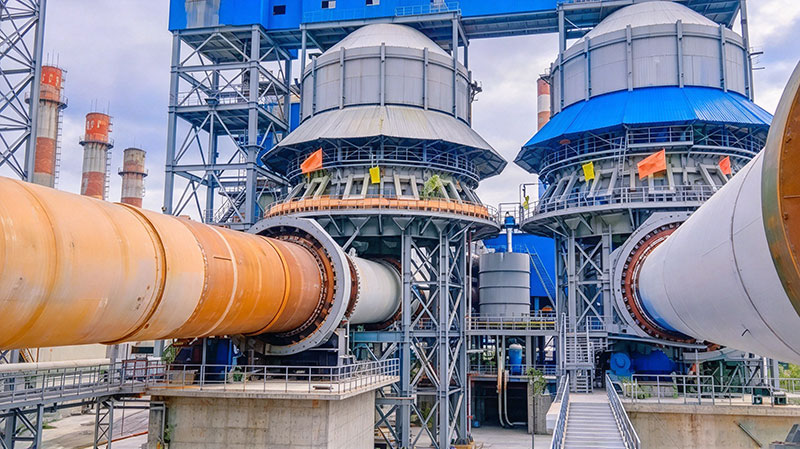
When evaluating a 1,000 TPD lime kiln supplier, buyers should request evidence that clearly identifies the project scope and the basis on which production capacity was measured. Relevant documents may include contractual technical requirements, commissioning records, and production or acceptance reports.
5. 80 TPD Lime Rotary Kiln Project in Fumin County, Yunnan, China
The 80 TPD lime rotary kiln project in Fumin County, Yunnan Province, demonstrates a smaller-capacity application within Henan Hongke's project portfolio.
Smaller production lines still require careful coordination between material feeding, kiln operation, cooling, dust collection, and finished-product handling. The equipment arrangement should be appropriate for the planned output, available installation space, raw material conditions, and maintenance requirements.
Project Planning Priorities
For an 80 TPD lime production line, the project review should establish:
The required daily production capacity and operating schedule.
Limestone feed size, quality, and moisture conditions.
The selected kiln configuration and process requirements.
Suitable cooling and finished-lime handling arrangements.
Dust collection requirements and site-specific environmental conditions.
Equipment access, maintenance arrangements, and operator requirements.
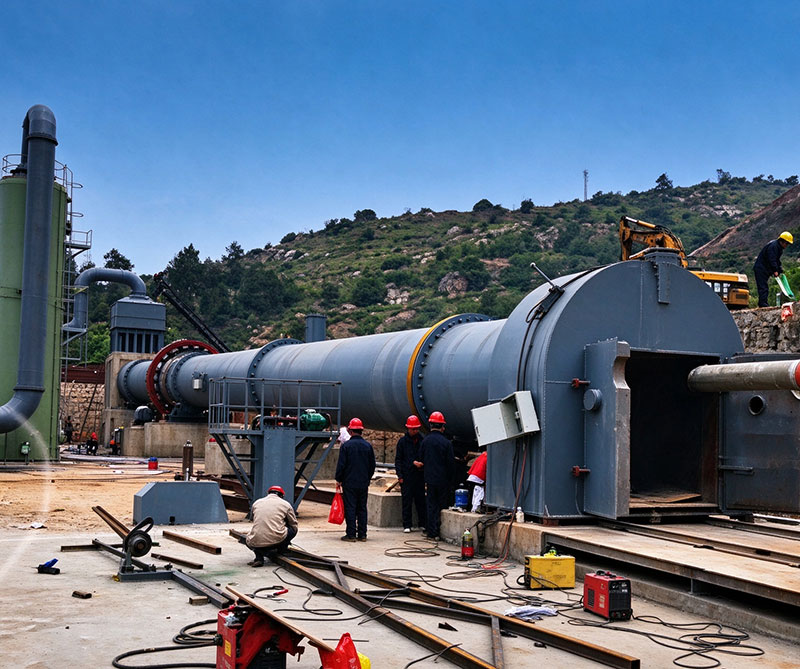
A project should be assessed against its own design and contractual requirements. Equipment selected for a smaller line should not be assumed to have the same configuration as equipment used in an 800 TPD or 1,000 TPD production line.
6. Environmentally Friendly Lime Rotary Kiln Project in the Philippines
The environmentally friendly lime rotary kiln project in the Philippines is another project listed in Henan Hongke's portfolio.
Environmental performance depends on the overall process design, fuel characteristics, operating conditions, dust collection system, equipment sealing, maintenance practices, and the applicable local environmental requirements. Describing a project as environmentally friendly should therefore be supported by identifiable design features and, where available, relevant monitoring or compliance records.
Environmental and Process Considerations
A project-specific environmental review may include:
Dust collection at material transfer points and relevant process exhaust locations.
Selection of suitable dust collection equipment based on actual gas and dust conditions.
Control of material leakage and fugitive dust.
Fuel consumption and combustion conditions.
Equipment sealing and maintenance requirements.
Compliance with applicable emission limits and local regulations.

The phrase “environmentally friendly” should not be interpreted as proof of zero emissions or guaranteed regulatory compliance. Any specific environmental performance claim should be supported by the project's technical documents or monitoring results.
7. Mongolia 50 TPD Φ2.2 × 42 m Lime Rotary Kiln Project
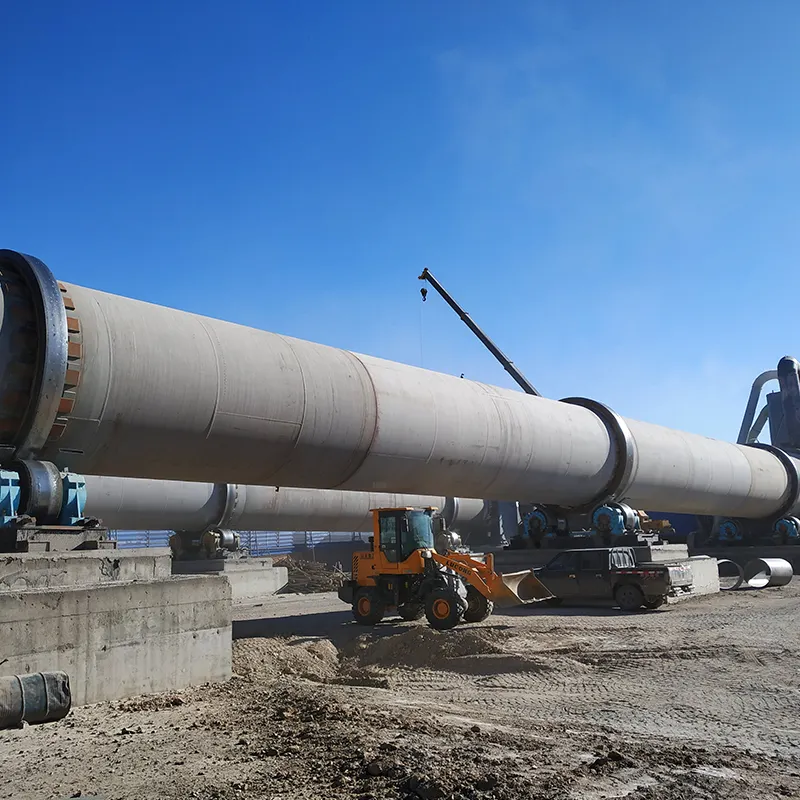
The Mongolia project is identified as a 50 TPD lime rotary kiln project with a kiln specification of Φ2.2 × 42 m, meaning a nominal diameter of 2.2 m and a length of 42 m.
Kiln dimensions alone do not establish actual production capacity. Output depends on the process design, limestone characteristics, feed preparation, operating temperature, residence time, fuel conditions, and finished-product requirements.
Equipment Selection for the Project
When reviewing a kiln of this specification, buyers should consider:
The compatibility of the kiln dimensions with the process design.
Limestone feed size and material characteristics.
The required kiln speed and drive arrangement.
Supporting rollers, riding rings, seals, and maintenance access.
Cooling equipment and finished-lime conveying.
Dust collection and the project's environmental requirements.
Electrical controls and operating procedures.
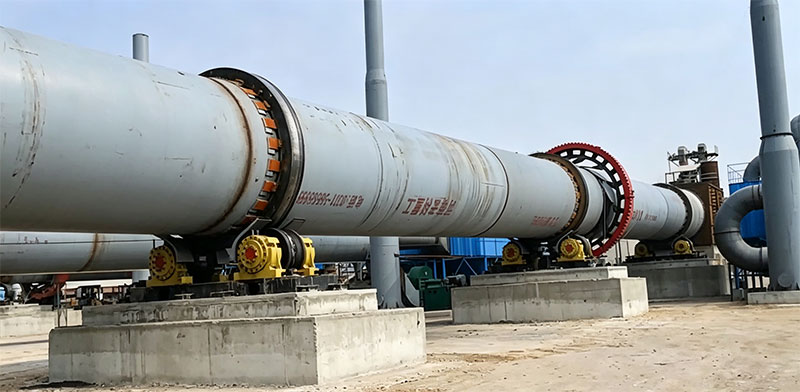
For international projects, buyers should also confirm installation conditions, local utilities, transportation arrangements, commissioning responsibilities, operator training, and spare parts requirements.
8. Typical Equipment Configuration of a Lime Rotary Kiln Production Line
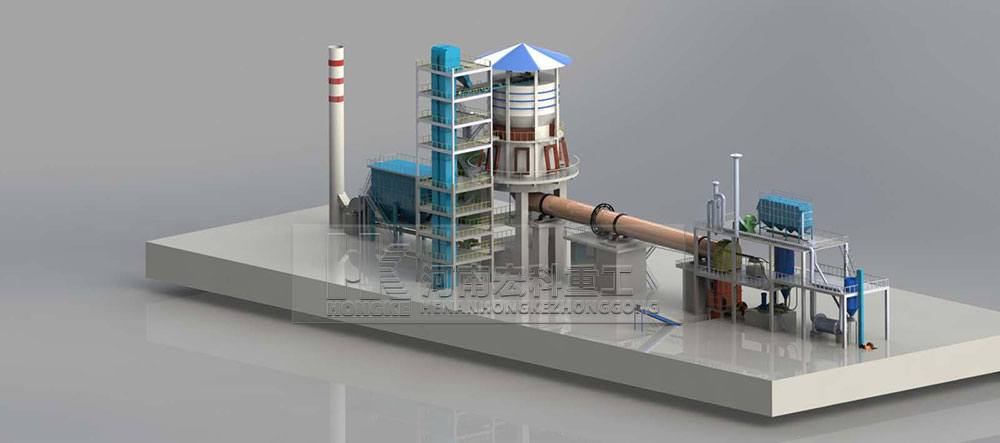
A lime rotary kiln production line consists of interconnected equipment selected to meet the raw material, capacity, product quality, and environmental requirements of a specific project.
The following table describes a typical configuration. It is a reference list, not a claim that every item was supplied in every project listed above.
| Equipment | Main Function |
|---|---|
| Raw Material Crusher | Reduces limestone to the required feed size when crushing is included in the project scope. |
| Quantitative Feeder | Controls the rate of material feeding into the production process. |
| Belt Conveyor | Transfers limestone and other materials between process sections. |
| Bucket Elevator | Lifts material vertically where required by the plant layout. |
| Lime Rotary Kiln | Provides the high-temperature process for converting suitable limestone into lime. |
| Lime Cooler | Reduces the temperature of discharged lime to suit downstream handling and the process design. |
| Dust Collection System | Collects dust from designated process and material-handling points according to the system design. |
| Control System | Monitors and controls the relevant equipment and process operations. |
How the Equipment Works Together
Step 1: Limestone preparation
Limestone is inspected and prepared to meet the feed requirements. A crusher may be included when the incoming material size needs to be reduced.
Step 2: Quantitative feeding and conveying
The feeder regulates the material supply, while belt conveyors and bucket elevators transfer limestone to the appropriate process sections.
Step 3: Rotary kiln processing
The prepared limestone enters the rotary kiln, where thermal processing converts calcium carbonate into calcium oxide and carbon dioxide under suitable process conditions.
Step 4: Lime cooling
The discharged lime passes through the selected cooling arrangement to reduce its temperature before downstream handling.
Step 5: Dust collection and material handling
Dust collection equipment serves the designated process points. Conveying and storage arrangements are selected according to the plant layout and finished-product requirements.
Step 6: Process monitoring and control
The control system supports operation and monitoring of the equipment included in its scope. The exact control functions depend on the approved project design.
The final configuration may also include additional equipment depending on limestone quality, fuel type, plant layout, product requirements, and the customer's technical specifications.
9. Project Commissioning, Operating Stability, and Result Verification
For buyers evaluating a lime rotary kiln manufacturer, successful project delivery involves more than installing the kiln. Commissioning, operating stability, finished-product quality, energy consumption, and compliance with contractual requirements all need to be considered.
Henan Hongke reports that its lime kiln projects have been commissioned according to their respective project arrangements, with stable operation and technical performance assessed against contractual requirements. The company also reports positive customer feedback concerning system stability and energy consumption, as well as preliminary discussions about potential follow-up cooperation.
These statements should be supported by project-specific records before being treated as verified results for any individual installation.
What Buyers Should Verify
Commissioning and start-up
Review the commissioning schedule, start-up records, and confirmation that the equipment was commissioned within the agreed project scope and timeline.
Operating stability
Examine operating records over a defined period, including relevant interruptions, equipment availability, and maintenance events.
Production capacity
Confirm whether the stated output refers to design capacity, a short-term production test, or sustained daily production. Review the measurement period and operating conditions.
Finished lime quality
Check the agreed quality indicators, such as available CaO, residual CO₂, reactivity, or other parameters specified in the contract. Not every parameter applies to every project.
Energy consumption
Review the defined energy-consumption boundary, fuel type, production rate, raw material characteristics, and calculation method before comparing results.
Contractual acceptance
Compare documented results against the specific acceptance criteria agreed for the project. A claim that performance met or exceeded contractual requirements should be made only when supported by the relevant records.
What Does “Verified Results” Mean?
In this article, verified results should mean that a stated project outcome can be traced to appropriate evidence, rather than being based only on a general marketing description.
Depending on the project, supporting evidence may include:
Signed commissioning or acceptance documentation.
Production records covering a clearly defined period.
Laboratory results for finished lime.
Fuel or energy consumption records with a stated calculation method.
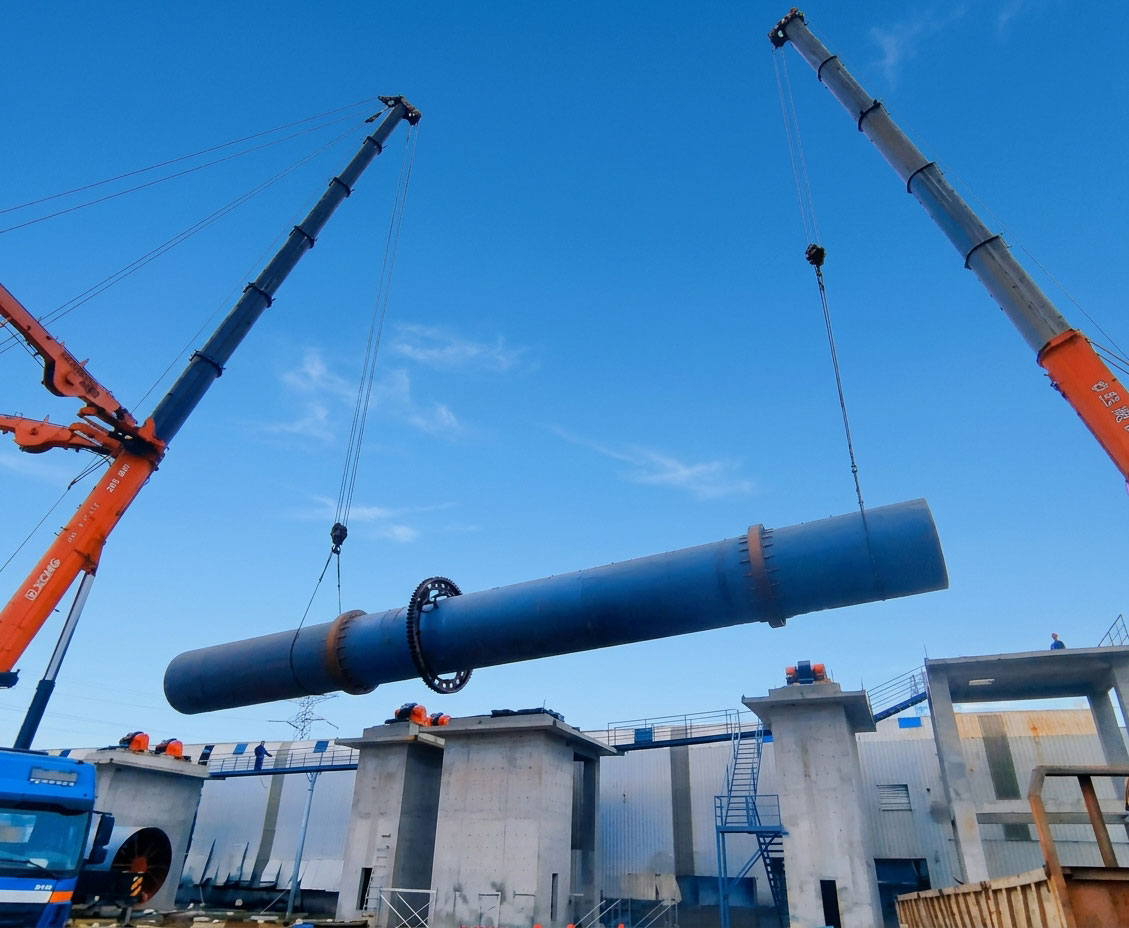
Site photographs or videos that can be linked to the specific project.
Customer feedback approved for publication.
Where a record is not available or cannot be published, the corresponding claim should be qualified or omitted. Confidential customer information can be redacted while retaining enough context to identify the type of evidence and the project scope.
10. Why Project-Specific Equipment Configuration Matters
Lime rotary kiln projects vary significantly in production capacity, raw material properties, fuel conditions, environmental requirements, and installation constraints. A standard equipment list is useful for initial planning, but it cannot replace project-specific engineering.
When comparing lime rotary kiln suppliers, buyers should clarify:
Required daily output and expected operating schedule.
Limestone chemical composition, feed size, and moisture.
Required finished-lime quality and applicable testing methods.
Fuel type, fuel availability, and energy-consumption measurement.
Dust collection and environmental compliance requirements.
Equipment supply boundaries and installation responsibilities.
Commissioning, training, warranty, and spare parts arrangements.
Performance test conditions and contractual acceptance criteria.
These details help determine whether a proposed lime kiln system is suitable for the intended production conditions.
11. Related Lime Rotary Kiln Resources
For additional information about equipment selection, company capabilities, and manufacturing inspection, readers can explore the following resources:
How to Choose a Reliable Lime Rotary Kiln Manufacturer: A Buyer’s Guide — practical criteria for evaluating suppliers, equipment specifications, and project requirements.
Henan Hongke Heavy Machinery Co., Ltd. — Lime Rotary Kiln Manufacturer and Production Line Solutions — company information and lime production line solutions.
Inside Henan Hongke Heavy Machinery: Rotary Kiln Manufacturing, Inspection and Quality Control — manufacturing, assembly, inspection, and pre-delivery verification topics.
12. Request a Lime Rotary Kiln Configuration for Your Project
Henan Hongke Heavy Machinery Co., Ltd. provides rotary kiln equipment and production line solutions for lime manufacturing projects with different capacity and process requirements.
To evaluate a suitable configuration, please provide the following project information:
Target capacity: tons per day (TPD).
Raw material: limestone composition, size, and moisture.
Finished product: required lime quality and intended application.
Fuel: available fuel type and relevant supply conditions.
Project location: country and site conditions.
Project scope: individual kiln equipment or a complete lime production line.
Technical requirements: applicable environmental limits, automation requirements, and performance criteria.
Based on these details, the proposed equipment configuration can be evaluated against the project's process requirements, installation conditions, and contractual performance targets.
Contact Henan Hongke Heavy Machinery Co., Ltd. to discuss your lime rotary kiln project and request a project-specific equipment proposal.