
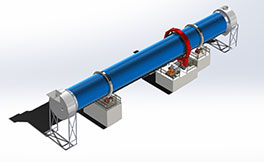
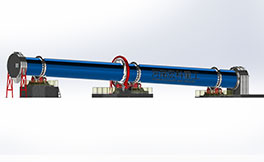
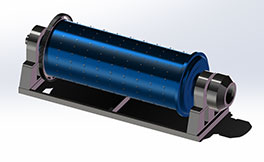
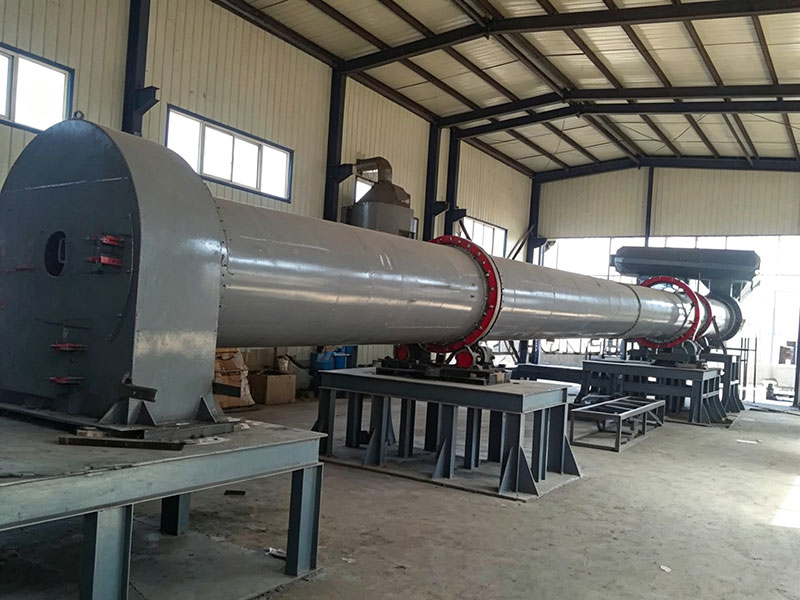
Henan Hongke Heavy Machinery Co., Ltd. ("Henan Hongke Machinery") is pleased to report that the installation of a φ1.2 × 24 m zinc oxide rotary kiln is currently underway in Tianjin, China. The project is progressing on schedule, with major mechanical installation milestones already completed and the system on track for commissioning in the coming weeks.
This rotary kiln system is designed to process zinc-bearing raw materials — including zinc ore, zinc-containing industrial residues, and steel mill dust — through high-temperature carbothermic reduction and vapor-phase oxidation, producing high-quality zinc oxide (ZnO) powder for the rubber, ceramics, chemical, and electronics industries.
What Is a Zinc Oxide Rotary Kiln?
A zinc oxide rotary kiln operates on the principle of the Waelz process — the most widely used pyrometallurgical method for zinc oxide production worldwide. The process works as follows:
- 1.Zinc-bearing feedstock is mixed with a carbon reductant (coke breeze or anthracite fines) and pelletized
- 2.The pellets are fed into the elevated end of a rotating, inclined kiln shell
- 3.As the pellets travel through the kiln, they pass through preheating, reduction, and high-temperature zones
- 4.At 1,100–1,200 °C, zinc is reduced from its oxide form to metallic zinc vapor
- 5.The zinc vapor contacts oxygen in the gas phase and re-oxidizes to form fine ZnO particles (white fume)
- 6.The ZnO fume is carried by the exhaust gas stream into a collection system (settling chamber, surface cooler, and bag filter)
- 7.The clean ZnO product is collected, weighed, and packaged
This process achieves zinc recovery rates exceeding 95% and produces ZnO with purity levels of 99.5% or higher.
Equipment Specification
The rotary kiln system installed in Tianjin has the following key specifications:
Complete System Scope
The Tianjin installation includes the following integrated subsystems, all designed and manufactured by Henan Hongke Machinery:
Installation Progress
Henan Hongke Machinery's on-site installation team has completed the following milestones to date:
Completed
- Civil foundations: All major equipment foundations — kiln support stations, settling chamber, cooler, bag filter, scrubber tower, and material handling structures — verified against design tolerances
- Kiln shell erection: All shell sections delivered, aligned, and welded. Longitudinal and circumferential welds completed and inspected
- Support stations: Both support stations — including tire rings, trunnion roller assemblies, thrust rollers, and bearing housings — installed and aligned
- Girth gear and drive: Girth gear mounted and meshed with the pinion. Motor and reducer installed and aligned
- Kiln head and tail seals: Labyrinth-type ceramic fiber seals fitted at both ends of the kiln
- Oxidation settling chamber: Chamber structure erected and connected to the kiln tail gas outlet
- Surface cooler: Cooler tube banks installed and connected to the settling chamber outlet
- Slag quench system: Quench tank, chain-scraper conveyor, and water circulation system installed
In Progress
- Bag filter installation: Filter housing erected; filter bags being installed
- Ductwork: Main gas ductwork connecting the cooler to the bag filter nearing completion
- Scrubber tower: Packed tower structure erected; packing material and spray system installation underway
- Electrical and controls: Cable tray installation and cable pulling in progress; DCS panel and instruments on-site
- Pelletizing system: Disc pelletizer and feed conveyors being positioned and connected
Upcoming
- Final ductwork connections and system sealing
- Electrical terminations and instrument calibration
- Cold commissioning (mechanical and electrical checks)
- Hot commissioning (first fire, heat-up, feed introduction, and ZnO collection)
- Performance guarantee test run
Design Highlights for Zinc Oxide Production
The Tianjin rotary kiln incorporates several design features specifically optimized for zinc oxide production:
Optimized High-Temperature Zone Length
The kiln's 24 m length is proportioned to provide a high-temperature reduction zone of approximately 8–10 meters — sufficient for complete zinc volatilization at the design feed rate. This is critical: an undersized high-temperature zone results in incomplete reduction and high zinc content in the discharged slag (zinc loss), while an oversized zone wastes fuel and accelerates refractory wear.
Deep-Pocket Internal Lifters
The interior of the kiln shell is fitted with specially designed lifting flights that pick up the pelletized feed and cascade it through the hot gas stream. The flight geometry is optimized for the dense, pelletized feed (bulk density 1.5–2.0 t/m³) — ensuring uniform heat exposure and preventing material short-circuiting through the kiln.
Negative Pressure Operation
The kiln operates under slight negative pressure at the feed end, maintained by the downstream exhaust fan. This serves two purposes: it draws the zinc-laden gas stream toward the collection system (maximizing ZnO recovery), and it prevents hot gas and dust from escaping at the feed and discharge ends (protecting worker safety and the environment).
Integrated Gas Treatment Train
The exhaust gas treatment system is designed as an integrated train — settling chamber → surface cooler → bag filter → scrubber — with each stage performing a specific separation or cleaning function. This ensures maximum ZnO collection efficiency (the fine ZnO particles are captured in the bag filter) and regulatory compliance for SO₂ and particulate emissions at the stack.
Feedstock and Product
Raw Materials Processed
The Tianjin kiln is designed to accept a range of zinc-bearing feedstocks:
The feedstock is mixed with coke breeze or anthracite fines at a typical coke-to-ore ratio of 0.30–0.35:1 and pelletized before entering the kiln.
Product Quality
The ZnO product collected from the bag filter meets the following specifications:
This grade of ZnO is suitable for applications in rubber vulcanization, ceramic glazes, chemical synthesis, animal feed supplements, and zinc fertilizer production.
Environmental Protection
The Tianjin installation incorporates comprehensive environmental protection systems:
The environmental design ensures the installation meets both Chinese national emission standards and the more stringent local requirements applicable in the Tianjin area.
Why Tianjin?
Tianjin is one of China's major industrial and port cities, with a strong metallurgical and chemical industrial base. The location offers several strategic advantages for a zinc oxide production facility:
- Proximity to raw materials: Access to zinc-bearing feedstock from steel mills and smelters in the surrounding Hebei–Tianjin–Beijing industrial region
- Transportation infrastructure: Excellent road, rail, and port connectivity for both inbound raw materials and outbound ZnO product
- Market access: Close to major downstream consumers of ZnO in the rubber, chemical, and ceramics industries
- Skilled workforce: Availability of experienced industrial operators and maintenance technicians
Benefits to the Client
Henan Hongke Machinery's Zinc Oxide Kiln Capabilities
Henan Hongke Machinery designs and manufactures zinc oxide rotary kiln systems across a wide range of capacities:
Every system is engineered for the client's specific feedstock chemistry, capacity target, and product quality requirements. Henan Hongke Machinery supplies the complete production line — from batching and pelletizing through kiln, gas treatment, and product packaging — as an integrated turnkey package.
About Henan Hongke Heavy Machinery Co., Ltd.
Henan Hongke Heavy Machinery Co., Ltd., based in Henan Province, China, is a professional manufacturer of rotary kiln systems for zinc oxide, cement, lime, and metallurgical applications. The company's production facility is equipped with plate rolling machines, CNC machining centers, welding stations, and quality control laboratories, enabling complete in-house manufacturing of all major kiln components.
Henan Hongke Machinery serves clients worldwide, providing engineering, manufacturing, shipping, installation supervision, commissioning, and after-sales support as an integrated service.