
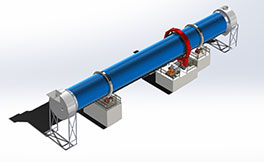
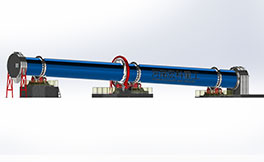
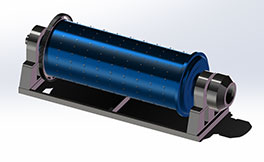
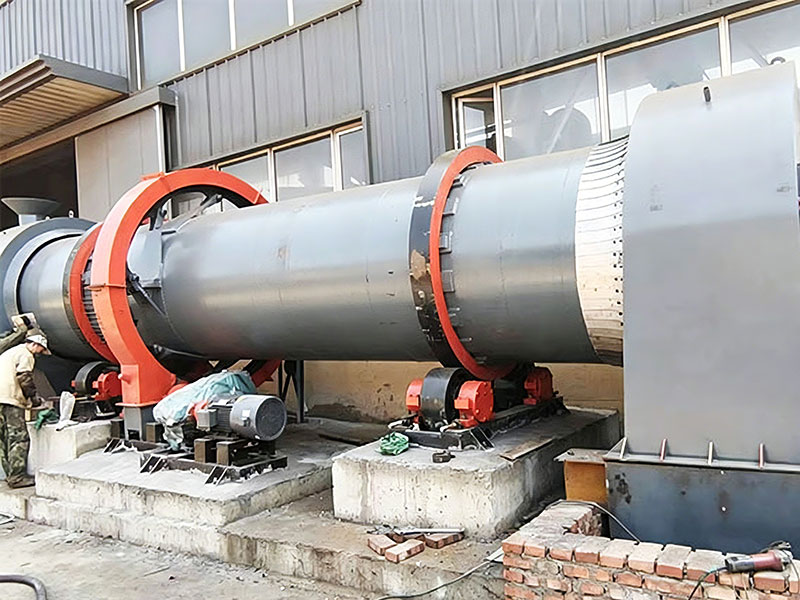
Henan Hongke Heavy Machinery Co., Ltd. ("Henan Hongke Machinery") has designed, manufactured, and commissioned a φ1.6 × 8 m rotary kiln for a steel turnings calcination project in Hebei Province, China. The kiln is specifically engineered to process 45# steel turnings (AISI 1045 equivalent) — a medium-carbon steel widely used in automotive, machinery, and hardware manufacturing — removing oils, moisture, and surface contaminants to produce clean, high-density calcined material suitable for remelting and downstream metallurgical applications.
This project addresses a real and growing challenge in the metals processing industry: how to efficiently and economically recycle large volumes of oily, contaminated steel turnings generated by machining operations, rather than disposing of them as industrial waste or selling them at heavily discounted prices as low-grade scrap.
The Problem: Contaminated Steel Turnings
Steel turnings — the curly, stringy chips produced by lathes, CNC machines, milling centers, and other metal-cutting operations — are generated in enormous quantities across the global metalworking industry. For every ton of finished machined parts, 100–300 kg of turnings are produced as a byproduct.
The challenge is that these turnings are heavily contaminated:
The economic impact is significant. Clean, dry 45# steel turnings command a substantially higher price than oily, wet turnings. In China's scrap market, the price differential between contaminated and clean turnings can be 300–800 RMB per ton (approximately $40–110 USD/ton). For a facility generating 100+ tons of turnings per month, the annual revenue recovery from calcination can be substantial.
Additionally, many steel mills and foundries — particularly electric arc furnace (EAF) operations — strictly reject oily turnings due to the risk of explosions, excessive fumes, and inconsistent melt chemistry. Calcination solves this problem by producing a clean, dry, consistently high-quality feedstock.
Equipment Specification
The rotary kiln supplied by Henan Hongke Machinery for this project has the following specifications:
Design Features for Steel Turnings Application
Processing steel turnings in a rotary kiln presents unique challenges that differ fundamentally from processing minerals, sludge, or limestone. The Henan Hongke Machinery engineering team adapted the kiln design specifically for this application:
Heavy-Duty Internal Flight Design
Steel turnings are dense (bulk density of 1.5–2.5 t/m³ depending on chip geometry) and prone to tangling and nesting. Standard flat flights used for light bulk materials would cause turnings to accumulate and slide rather than cascade. The kiln is fitted with deep-pocket, angled flights specifically designed to lift and effectively drop heavy steel turnings, ensuring uniform exposure to the hot gas stream and preventing material short-circuiting.
Wear-Resistant Shell Lining
The tumbling action of sharp, abrasive steel turnings against the kiln shell causes accelerated wear. The interior of the kiln is lined with wear-resistant manganese steel plates in the high-impact zones (feed section and mid-kiln), significantly extending shell life compared to an unlined carbon steel shell.
Indirect Heating Configuration
This is the most critical design feature for steel turnings calcination. The kiln uses an indirect heating system where combustion gases flow through an external jacket or inner tube, transferring heat through the shell wall without direct contact between the flame/hot gas and the turnings. This is essential for three reasons:
- 1.Fire and explosion safety: Steel turnings coated in cutting oil are flammable. Direct flame contact could ignite the oil, creating a serious fire or explosion hazard inside the kiln. Indirect heating keeps the combustion process physically separated from the turnings.
- 2.Oil vapor recovery: The oil evaporated from the turnings is collected as a concentrated vapor stream — not diluted with combustion gases. This makes it possible to condense and recover the oil for recycling or proper disposal, rather than burning it into the exhaust.
- 3.Clean product quality: No combustion byproducts (ash, soot, unburned fuel) contaminate the calcined turnings, ensuring the discharged material meets the quality requirements of steel mills and foundries.
Sealed Inert Atmosphere Option
For applications involving turnings with very high oil content or fine, dust-prone chips, the kiln can be configured with a nitrogen inerting system that maintains a low-oxygen atmosphere inside the drum during the early stages of heating — the period when oil vapors are most concentrated and the fire risk is highest. This feature provides an additional layer of operational safety.
Oil Vapor Collection and Condensation System
The exhaust gas system is specifically designed to handle the oil-laden vapors released during the calcination process:
- 1.Exhaust gas exits the kiln at 120–180 °C carrying evaporated cutting oil, moisture, and trace particulates.
- 2.A cyclone separator removes any entrained steel fines or coarse particles.
- 3.A condensation unit cools the gas and recovers liquid oil and water.
- 4.The condensed oil is collected in a storage tank for recycling or disposal.
- 5.The remaining gas passes through a bag filter and/or activated carbon adsorber before stack discharge, meeting emission requirements for VOCs and particulates.
Gentle Material Handling
Steel turnings are abrasive and can damage conventional feed and discharge equipment. The system includes:
- A vibrating feeder with abrasion-resistant liner for controlled feed into the kiln
- A sealed discharge chute with wear-resistant lining connecting the kiln outlet to a cooling conveyor
- A belt conveyor with steel-cord reinforcement for transporting hot calcined turnings to storage
Working Principle
The calcination of steel turnings in the rotary kiln follows a carefully controlled thermal process:
Stage 1: Preheating (Feed End)
Turnings enter the elevated end of the inclined kiln and begin to move toward the discharge end as the drum rotates. In the preheating zone (200–400 °C), surface moisture begins to evaporate and low-boiling-point cutting fluids start to volatilize.
Stage 2: Oil Volatilization (Middle Section)
As the turnings progress into the main heating zone (400–600 °C), the bulk of the cutting oils, lubricants, and hydraulic fluids are vaporized. This is the critical stage where most of the contaminant mass is removed. The oil vapor is carried away by the exhaust gas stream and directed to the recovery/treatment system.
Stage 3: Final Calcination (Discharge End)
In the final zone (500–700 °C), any remaining residual oil films and carbon deposits on the turnings are thermally decomposed. The turnings exit the kiln at the discharge end as clean, dry, bright-surfaced material with total residual oil and moisture content below 0.5%.
Stage 4: Cooling and Collection
The hot calcined turnings pass through an air-cooled conveyor or rotary cooler to reduce their temperature to below 60 °C for safe handling and storage. The cooled material is then conveyed to a storage yard, bin, or directly to a briquetting press.
Process Control Parameters
Performance Results
Based on operating data from the Hebei installation:
The client reports that the revenue uplift from selling clean turnings at premium scrap prices — combined with the value of recovered cutting oil — delivers a payback period of approximately 8–14 months on the kiln investment, depending on monthly throughput and market scrap prices.
Benefits to the Client
Client Feedback
"Before we installed this rotary kiln, we were selling our oily turnings at deep discounts — sometimes at half the price of clean scrap. Some steel mills simply refused to take them. Now, after calcination, our turnings are clean, dry, and accepted everywhere at full market price. The kiln runs reliably and the oil recovery system pays for a significant portion of the operating cost. This was one of the best investments we have made for our scrap processing operation."
About This Application
The calcination of steel turnings in rotary kilns is a well-established process used by scrap processors, metalworking shops, and steel recycling facilities worldwide. It is applicable to turnings from a wide range of steel grades:
- Low-carbon steels (10#, 20#, Q235, AISI 1010–1020)
- Medium-carbon steels (45#, 50#, AISI 1045–1050)
- Alloy steels (40Cr, 42CrMo, AISI 4140, 4340)
- Stainless steel turnings (304, 316, 430 — requiring higher temperatures and special atmosphere control)
- Cast iron chips
Henan Hongke Machinery has the engineering capability to design turnings calcination kilns for any steel grade and throughput requirement.
About Henan Hongke Heavy Machinery Co., Ltd.
Henan Hongke Heavy Machinery Co., Ltd., based in Henan Province, China, is a professional manufacturer of industrial rotary equipment — rotary kilns, rotary dryers, and rotary coolers — serving the metallurgical, environmental, chemical, mining, and building materials industries. The company provides complete in-house design, manufacturing, installation supervision, and after-sales support for rotary kiln systems worldwide.