

Mongolia 1,000 TPD Cement Rotary Kiln Production Line Project
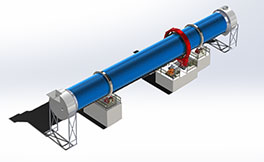
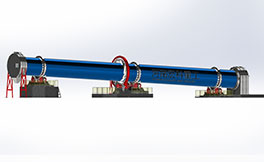
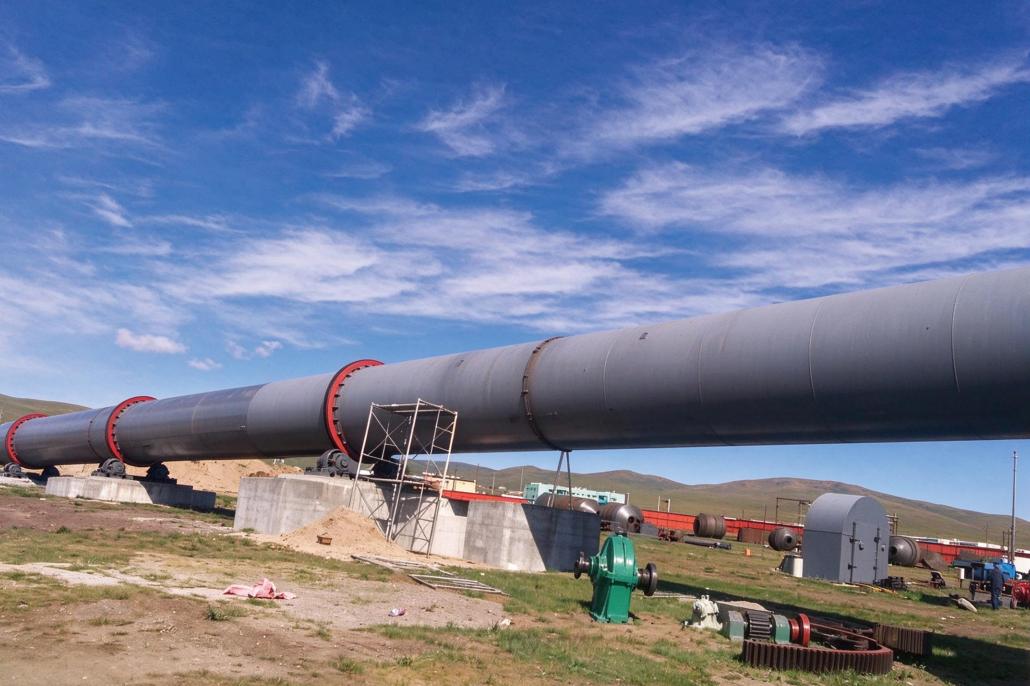
Henan Hongke Heavy Machinery Co., Ltd. participated in a cement rotary kiln production line project in Mongolia, featuring a Φ3.2 × 50 m rotary kiln. Designed for a daily production capacity of 1,000 tons, the project is equipped with a 125 kW motor, while the total weight of the rotary kiln shell reaches 278 tons.
As a core thermal processing unit in cement manufacturing, the cement rotary kiln plays an important role in transforming prepared raw meal into cement clinker through high-temperature processing. The large-scale kiln configuration in this Mongolia project reflects the engineering requirements of industrial cement production, including equipment dimensions, mechanical loading, drive power and continuous material processing.
1. Mongolia Cement Rotary Kiln Project Overview
This project is a 1,000 TPD cement rotary kiln production line project in Mongolia. Its main highlighted equipment is a Φ3.2 × 50 m cement rotary kiln, designed as a key unit for the high-temperature clinker production process.
A cement rotary kiln is not simply a rotating steel cylinder. It is a major piece of thermal processing equipment that must operate as part of a coordinated production system. Its dimensions, drive arrangement, supporting structure and operating conditions all influence the overall equipment design and production process.
For this project, the kiln shell has a total weight of 278 tons. The equipment's motor power is 125 kW. These specifications are important reference points for understanding the scale and mechanical requirements of the project.
2. Key Technical Specifications of the Cement Rotary Kiln
The following table summarizes the main project information provided for the Mongolia cement rotary kiln production line.
| Item | Project Specification |
|---|---|
| Project Location | Mongolia |
| Project Type | Cement Rotary Kiln Production Line |
| Designed Daily Capacity | 1,000 tons per day |
| Rotary Kiln Model | Φ3.2 × 50 m |
| Motor Power | 125 kW |
| Total Kiln Shell Weight | 278 tons |
3. The Role of the Cement Rotary Kiln in Cement Production
The cement rotary kiln is one of the most important pieces of equipment in the cement clinker manufacturing process. Its primary function is to provide a controlled high-temperature environment in which prepared raw meal undergoes a series of physical and chemical reactions.
During cement production, limestone and other raw materials are processed, proportioned and ground into raw meal. The prepared material is then fed into the kiln system for thermal treatment. As the kiln rotates, the material moves gradually through the equipment while being exposed to the required temperature conditions.
Inside the high-temperature zone, the raw materials undergo chemical reactions and form cement clinker. The clinker is subsequently cooled and can be sent to the cement grinding stage, where it is ground with appropriate additives to produce finished cement.
Therefore, the cement rotary kiln directly participates in the clinker formation stage and must be matched with the upstream material preparation system and downstream clinker handling and cement grinding equipment.
4. How a Cement Rotary Kiln Production Line Works
A complete cement rotary kiln production line involves multiple interconnected processing stages. Although the exact equipment configuration depends on the project design, raw material characteristics and production requirements, a typical cement manufacturing process can be described as follows.
Raw Material Preparation
Limestone, clay and other required raw materials are prepared, proportioned and processed to achieve the desired chemical composition. Consistent raw material preparation provides a stable basis for subsequent clinker production.
Raw Meal Grinding and Homogenization
The prepared materials are ground into fine raw meal and homogenized to improve composition consistency. Stable raw meal quality is important for maintaining predictable kiln operation and clinker quality.
High-Temperature Processing in the Cement Rotary Kiln
The prepared raw meal enters the kiln system and undergoes thermal processing. The rotating kiln allows the material to move through different temperature zones. At the required high temperature, the raw meal undergoes clinker-forming reactions and develops into cement clinker.
Clinker Cooling and Handling
After leaving the kiln, hot clinker is cooled before being conveyed to subsequent storage or processing equipment. Effective cooling and material handling are important parts of the overall production process.
Cement Grinding and Finished Product Handling
In a conventional cement manufacturing plant, cooled clinker is ground with suitable additives to produce finished cement. The final product is then stored and prepared for dispatch.
These stages demonstrate why a cement rotary kiln production line must be considered as an integrated process rather than as an isolated piece of equipment.
5. Engineering Considerations for a Φ3.2 × 50 m Cement Rotary Kiln
A large cement rotary kiln requires coordinated mechanical and process engineering. For the Φ3.2 × 50 m kiln used in this Mongolia project, several technical parameters are particularly relevant.
Kiln Dimensions and Mechanical Loading
The kiln has a diameter of 3.2 meters and a length of 50 meters. Its total shell weight is 278 tons, indicating the substantial mechanical load that must be considered in the kiln support and installation design.
Support rollers, riding rings, the kiln foundation and related mechanical components must be designed and aligned to suit the equipment configuration and operating loads. Proper alignment is important for stable rotation and long-term mechanical operation.
Drive System and Motor Power
The project specifies a motor power of 125 kW. The drive system is responsible for rotating the kiln at the required operating speed. Its selection and configuration should match the kiln's mechanical characteristics, material loading and process requirements.
Stable drive operation is essential because kiln rotation affects material movement and the thermal processing conditions inside the equipment.
Integration with the Production Process
The performance of a cement rotary kiln depends not only on the kiln body and drive system but also on the coordination of feeding, material conveying, thermal processing, cooling and other associated systems.
For this reason, the design of a cement rotary kiln production line should consider the complete process flow, the characteristics of the raw materials, the required output and the operating conditions of the plant.
6. Project Highlights
The Mongolia project provides a practical example of a large cement rotary kiln configuration for a 1,000 TPD production line. Its main technical highlights include:
- Industrial-scale kiln configuration: A Φ3.2 × 50 m rotary kiln designed for cement clinker thermal processing.
- Defined production scale: A stated daily production capacity of 1,000 tons.
- Heavy kiln shell: A total kiln shell weight of 278 tons, representing a significant mechanical design and installation consideration.
- Drive power specification: A 125 kW motor for the kiln drive system.
- Production line perspective: The rotary kiln is considered as a key process unit within the broader cement production system.
These project parameters provide useful reference information for cement plant owners, engineering contractors and equipment buyers evaluating rotary kiln solutions for industrial production.
7. Cement Rotary Kiln Solutions from Henan Hongke Heavy Machinery
Henan Hongke Heavy Machinery Co., Ltd. specializes in mining and industrial machinery, including rotary kilns, rotary dryers, ball mills, crushers and related production line equipment.
For cement rotary kiln projects, equipment selection and production line planning should be based on the required capacity, raw material characteristics, process route, fuel conditions, site layout and operating requirements.
Whether a project requires an individual cement rotary kiln or a coordinated cement rotary kiln production line, the equipment configuration should be evaluated according to the actual engineering conditions rather than relying on kiln dimensions alone.
The Mongolia Φ3.2 × 50 m project, with its 125 kW motor and 278-ton kiln shell, demonstrates the scale of equipment involved in industrial cement production.
For a cement production project, contact Henan Hongke Heavy Machinery Co., Ltd. with your required capacity, raw material information and project conditions to discuss a suitable rotary kiln and production line configuration.
Frequently Asked Questions
1. What is the rotary kiln model used in the Mongolia cement project?
The project uses a Φ3.2 × 50 m cement rotary kiln.
2. What is the daily capacity of this cement rotary kiln production line?
The stated project capacity is 1,000 tons per day. The exact production metric, such as clinker output or finished cement output, should be defined according to the project's technical documentation.
3. What is the motor power of the cement rotary kiln?
The motor power specified for this project is 125 kW.
4. How much does the kiln shell weigh?
The total weight of the rotary kiln shell is 278 tons.
5. What is the main function of a cement rotary kiln?
A cement rotary kiln provides the high-temperature processing environment required for converting prepared raw meal into cement clinker. It is a key thermal processing unit in a conventional cement manufacturing process.
6. What information is needed to select a cement rotary kiln?
Important information includes the required production capacity, raw material composition, process route, fuel type, site conditions and the desired equipment configuration. These factors help determine the appropriate kiln dimensions and supporting systems.