

Project Overview
| Item | Details |
|---|---|
| Customer Background | An aggregate and lightweight building materials producer in Sichuan expanding into ceramsite production |
| Project Location | Sichuan Province, China |
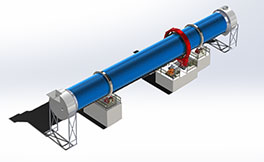
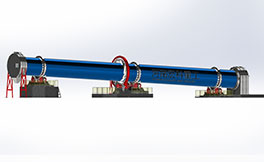
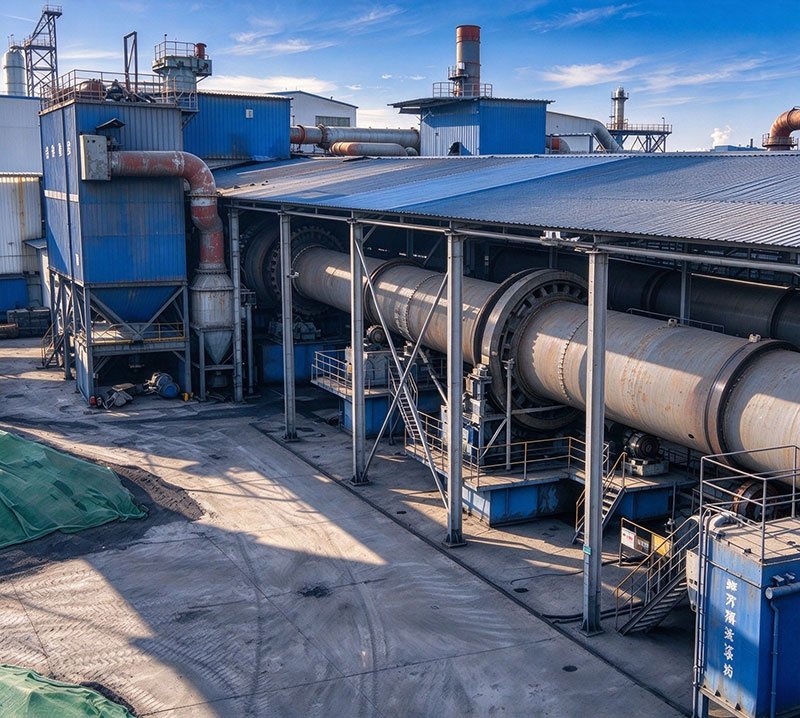
| Core Equipment | Φ3.5×60m ceramsite rotary kiln + complete production line |
| Capacity | 150,000–180,000 m³/year ceramsite (approx. 500–600 TPD) |
| Project Year | 2024 |
| Main Challenge | High-moisture shale/clay feedstock, strict ceramsite expansion control, limited site space |
| Solution | Rotary kiln with internal heat exchange structure, three-stage preheating, customized compact layout |
Customer Pain Points
The customer is a building materials producer in Sichuan looking to supply lightweight ceramsite aggregate to the local construction market. Their challenges were specific to the material and the site:
Feedstock variability: Local shale and clay had moisture content of 18–22% and inconsistent plasticity, making pellet formation and expansion behavior unpredictable.
Expansion control: Ceramsite quality depends on precise temperature control in the expansion zone (1,150–1,250°C). Fluctuations caused over-burning, poor density, or incomplete expansion.
Site constraints: The available land was narrow, requiring a compact line layout with minimal manual material handling.
Energy costs: The customer needed a kiln design that reduced fuel consumption per cubic meter of product.
Our Solution
Henan Hongke Heavy Machinery supplied a complete ceramsite production line built around a Φ3.5×60m rotary kiln. The process flow covers raw material crushing, batching, mixing, pelletizing, drying, preheating, calcination, and cooling.
Key configurations:
Rotary Kiln: Φ3.5×60m, 3.5% slope, variable speed drive (0.5–2.5 r/min), 160 kW main motor, refractory lining with high-alumina bricks in the calcination zone
Preheating System: Three-stage preheater utilizing kiln exhaust gas to dry and preheat green pellets, reducing fuel consumption
Internal Structure: Segmented lifters and a dam ring in the expansion zone to extend residence time and improve temperature uniformity
Pelletizer: Disc pelletizer with adjustable inclination and speed to match feedstock plasticity
Cooling: Rotary cooler with indirect water spray for controlled cooling of ceramsite
Control: PLC-based monitoring of kiln shell temperature, draft, feed rate, and fuel flow
Customized Design
The line was laid out in an L-shape to fit the narrow site. The pelletizing section was positioned adjacent to the kiln feed end, minimizing conveyor length. The preheater was integrated above the cooler to recover waste heat and reduce the footprint.
Technical Advantages
Waste heat recovery from the kiln exhaust reduced fuel consumption by approximately 12% compared to the customer‘s previous design
Variable speed drive allows adjustment of residence time when feedstock moisture or plasticity changes
PLC control with trend logging helps operators maintain stable expansion conditions
Delivery and Commissioning
Contract signed in early 2024. Manufacturing completed in 60 days. The complete line was assembled and no-load tested at our Henan facility before shipment. Our engineers spent 20 days on site in Sichuan for installation supervision, commissioning, and operator training. The line reached stable production within three weeks of hot commissioning.
Results
| Metric | Target | Achieved |
|---|---|---|
| Annual output | 150,000 m³ | 165,000 m³ (first year) |
| Ceramsite bulk density | 500–700 kg/m³ | 520–680 kg/m³ |
| Fuel consumption | 38 kg coal/t product | 33.5 kg coal/t product |
| Kiln availability | 85% | 90% |
Customer feedback: “The preheating system made the biggest difference. We use less coal and the pellets are more uniform before they enter the kiln.”
Why Henan Hongke Heavy Machinery
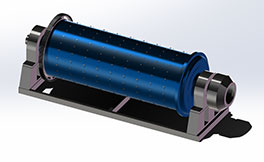
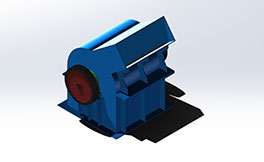
We provide one-stop solutions for mineral and building materials processing—rotary kilns, Rotary Dryers, ball mills, crushers, and complete production lines. This was a turnkey project: process design, equipment manufacturing, installation supervision, and commissioning. As a heavy machinery manufacturer with global service capability, we build for the material and the site, not for a catalog.
FAQ
Q: What feedstock is suitable for ceramsite production in a rotary kiln?
A: Shale, clay, fly ash, and sludge are common. Key parameters are plasticity, moisture, and chemical composition. We test client samples to confirm expansion behavior before finalizing kiln parameters.
Q: How is ceramsite expansion controlled?
A: Temperature in the expansion zone (1,150–1,250°C) and residence time are the main variables. The variable speed drive and internal dam ring help maintain stable conditions. PLC trend logging supports operator decisions.
Q: What is the fuel consumption per ton of ceramsite?
A: For this project, 33.5 kg coal per ton of product with the three-stage preheater. Consumption depends on feedstock moisture and target bulk density.
Q: Can the line handle different ceramsite grades?
A: Yes, within a range. Changing pelletizer settings and kiln temperature profile allows production of different density grades. Extreme changes may require batching adjustments.
Ready to start your project? Contact our engineers for a free process assessment and quote.