

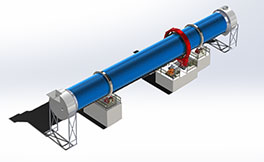
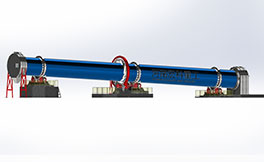
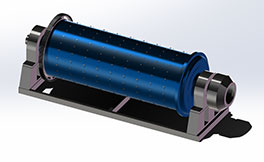
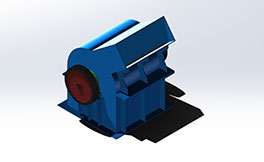
Calcium fluoride (CaF₂, fluorspar) is a basic raw material for metallurgical fluxes and hydrofluoric acid production. Its calcination is typically carried out in the 627–827°C range, and the calcination process directly affects the product's particle size distribution and compressive strength. Fujian is an important cluster for China's fluorochemical industry, and downstream metallurgical and chemical customers in the region have increasingly stringent requirements for the quality consistency of calcined fluorspar. A local fluorochemical enterprise found that its existing small-scale calcination equipment could no longer meet the dual pressures of order growth and environmental compliance, and decided to build a new 300 TPD calcium fluoride calcination line centered on a Φ3×48m rotary kiln.
During the equipment selection stage, the owner examined several rotary kiln suppliers and ultimately selected Henan Hongke Heavy Machinery Co., Ltd. to undertake the design and supply of the main equipment. The key consideration behind this choice was that the owner needed a chemical rotary kiln specifically configured for the characteristics of fluorspar calcination, not a modified cement or lime kiln. Hongke's process experience accumulated in the earlier Zhejiang Haining Φ2.5×60m fluorspar rotary kiln project served as direct evidence of the credibility of its technical proposal.
Process Scheme and Equipment Configuration
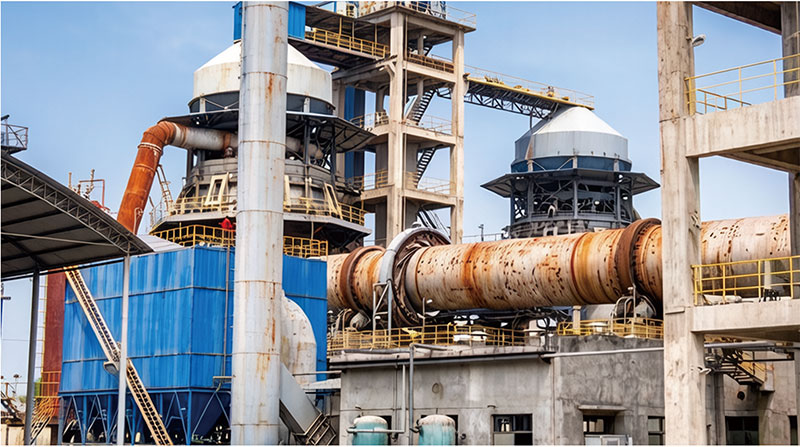
The production line follows the typical chemical rotary kiln flow of "feeding — rotary kiln calcination — cooling — dust collection — finished product conveying." Fluorspar material is fed into the kiln tail as filter cake or wet powder via a variable-speed screw feeder. The kiln body operates at a 3.5–4% inclination, and the variable-frequency drive allows the material residence time inside the kiln to be flexibly adjusted according to the feed moisture content. The Φ3×48m kiln length provides ample reaction time for the full calcination of fluorspar powder, making it particularly suitable for processing feed material with finer particle size or slight moisture fluctuations.
Heat is supplied by a multi-channel burner at the kiln head, adaptable to natural gas or pulverized coal, accommodating local fuel supply conditions in Fujian. In response to the fine, dust-prone physical characteristics of fluorspar powder, the kiln tail sealing adopts a labyrinth seal combined with air purge, which both reduces the disturbance of cold air leakage on the kiln's temperature field and suppresses the escape of fluorine-containing dust. Multi-point thermocouples are arranged along the kiln length, and the PLC centralized control system displays the data from each temperature measurement point together with kiln speed and feed rate on the central control screen, allowing operators to fine-tune the burner output in real time based on temperature feedback from the calcination zone.
The dust collection stage uses a two-stage configuration of cyclone pre-separation plus bag filter, capturing fine fluorspar dust in the kiln tail flue gas, with emission concentrations meeting local environmental regulatory requirements. The high-temperature material discharged from the kiln is cooled in a rotary cooler before entering the finished product silo; the cooling process takes into account both the convenience of subsequent packaging and partial recovery of waste heat.
Operational Performance and Customer Feedback
Since commissioning, the line has stably processed around the design value of 300 tonnes per day. The particle size distribution and compressive strength of the finished calcined fluorspar meet the owner's product positioning for metallurgical-grade and chemical-grade fluorspar. The owner reported that under continuous operation, the temperature rise of the drive system and support rollers of the Φ3×48m kiln is normal, and the kiln sealing effect is directly reflected in the stability of fuel consumption — when the kiln tail negative pressure is maintained at the set value, the fluctuation range of fuel consumption per unit product narrows.
Centralized monitoring in the control room enables linked, same-screen display of feed rate, kiln speed, all temperature measurement points, and the operating status of the dust collection system, with a lean on-site operator configuration. Daily inspections focus on two indicators: the burner flame shape and the kiln tail negative pressure. The operating flexibility is sufficient to cope with normal fluctuations in the moisture content of the incoming filter cake.
Case Summary
The Fujian Φ3×48m calcium fluoride chemical rotary kiln line, with a capacity of 300 TPD, verifies Henan Hongke Heavy Machinery Co., Ltd.'s engineering adaptability in the field of fluorspar calcination: the choice of kiln specifications is not an isolated parameter but forms a pragmatic configuration logic together with material characteristics, fuel conditions, and operating flexibility. Sealing design targeting fine fluorspar powder, a temperature control system retaining manual adjustment interfaces, and a dust collection configuration that also captures fluorine-containing dust — the engineering quality of these details determines whether a 300 TPD-class chemical rotary kiln can maintain stable quality over long-term operation. For domestic fluorochemical enterprises evaluating calcination equipment of comparable scale, the configuration approach and operating data of this line can serve as a reference.