

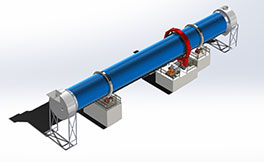
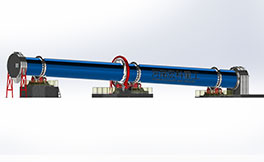
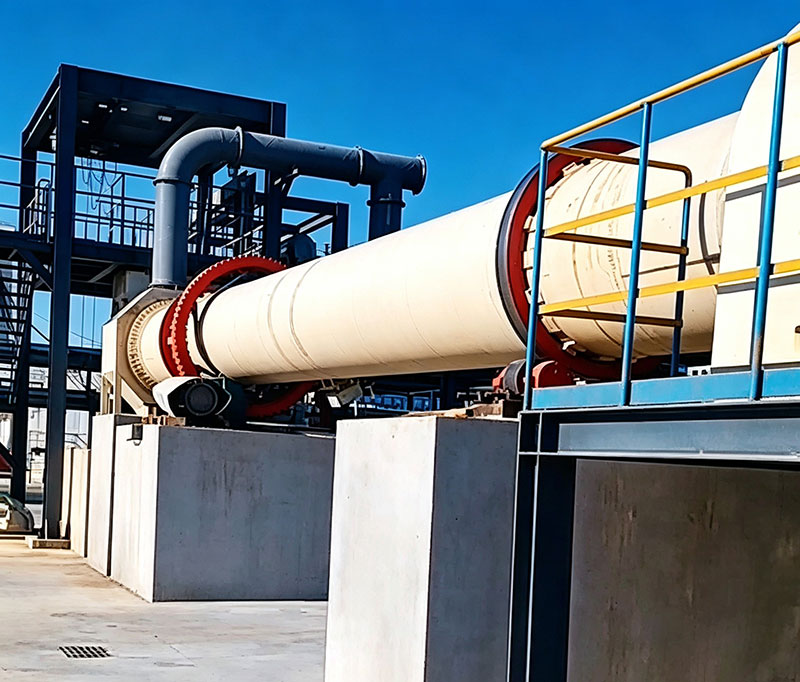
Henan Hongke Heavy Machinery Co., Ltd. is pleased to report on the successful commissioning of a titanium dioxide (TiO₂) rotary calcination kiln production line at a customer site in Yingkou, Liaoning Province, China. This project demonstrates our capability to deliver specialized thermal processing equipment for the high-value chemical pigment industry.
Project Background: Meeting Titanium Dioxide Market Demand
Titanium dioxide is the world's most widely used white pigment, essential for paints, coatings, plastics, paper, and cosmetics. The pigment properties of rutile titanium dioxide are superior to anatase and of greater economic importance .
Our customer in Yingkou, a major industrial port city in Liaoning, operates in the chemical pigment sector. They identified the need to expand their titanium dioxide production capacity to serve growing domestic and export markets. The customer required a reliable, high-performance rotary kiln specifically designed for the calcination process—the final and critical step in the sulfate method of TiO₂ pigment production .
The customer's requirements were clear:
| Requirement | Target |
|---|---|
| Production capacity | Custom-engineered for their target output |
| Calcination temperature | 860–920°C (for crystal phase transformation) |
| Product quality | High rutile conversion, optimal crystal size |
| Operational reliability | Continuous 24/7 operation |
| Process control | Precise temperature management across zones |
The Technology: Titanium Dioxide Calcination in a Rotary Kiln
The calcination stage in the sulfate method is carried out in a rotary kiln . The kiln feed is a paste-like filter cake containing mainly anatase crystallites, a low amount of sulfate, and over 50 mass% moisture. Within the kiln, the material undergoes:
Drying – Moisture is evaporated in the first section of the kiln
Desulfurization – Sulfates are decomposed, releasing SO₂, O₂, and H₂O
Crystal phase transformation – Anatase converts to rutile at high temperature
Crystal growth – Pigment particle size is developed
The residence time of the material within the kiln is approximately 5–6 hours . The calcination process produces TiO₂ pigment with a rutile content of around 98% .
Temperature Control: The Key to Quality
Precise temperature control is critical for titanium dioxide calcination. The process requires multi-stage temperature management:
| Process Stage | Temperature Range | Purpose |
|---|---|---|
| Dehydration | ~300–400°C | Remove moisture from filter cake |
| Desulfurization | ~700–800°C | Decompose sulfate compounds |
| Crystal transformation | 850–930°C | Anatase → Rutile conversion |
| Crystal growth | 930–1,000°C | Develop pigment particle properties |
Our Solution: Engineered TiO₂ Calcination System
Henan Hongke Heavy Machinery engineered and manufactured a complete titanium dioxide calcination line centered around a rotary kiln designed for this specific application.
Key Equipment Specifications
| Parameter | Specification |
|---|---|
| Kiln type | Titanium dioxide calcination rotary kiln |
| Kiln body | Steel plate with refractory lining |
| Slope | 2–3.5% |
| Rotation speed | 0.2–0.6 rpm (variable frequency drive) |
| Calcination temperature | Up to 1,000°C |
| Fuel | Natural gas or pulverized coal |
System Configuration
1. Feed System
The system includes a feed screw conveying the filter cake from the vacuum rotary drum filters into the kiln tail.
2. Rotary Kiln Body
The kiln is constructed from high-quality steel plate with a refractory lining. A large ring gear is fixed to the cylinder, driven by a pinion through a main reducer. An auxiliary drive ensures the kiln can continue rotating during power interruptions, preventing shell deformation .
3. Combustion System
The burner is located at the kiln head, delivering hot combustion gases counter-current to the solid flow. The kiln is equipped with a multi-channel burner capable of firing natural gas or pulverized coal.
4. Cooling System
A cooler is installed at the kiln head to cool the calcined titanium dioxide product, enabling waste heat recovery and facilitating transfer to downstream processing .
5. Sealing System
The kiln head uses a shell-type seal, while the kiln tail is equipped with an axial contact sealing device to ensure reliability and minimize air leakage.
6. Dust Collection
A multi-stage dust collection system captures TiO₂-containing dust from the exhaust gases before they are released to the atmosphere .
7. Automation & Control
The system includes PLC-based automation with temperature monitoring across zones, rotation speed control, and full data logging.
Why Titanium Dioxide Requires a Specialized Rotary Kiln
Titanium dioxide calcination places unique demands on rotary kiln design:
| Feature | Why It Matters |
|---|---|
| Precise zone temperature control | The anatase-to-rutile phase transition requires specific temperature profiles for optimal pigment properties |
| Counter-current gas flow | Ensures efficient heat transfer and complete calcination |
| Drying capability | The first section (~50% of kiln length) handles drying of the high-moisture filter cake |
| Desulfurization | Must effectively remove sulfate compounds without compromising pigment quality |
| Variable speed drive | Allows residence time adjustment to match product specifications |
Customer Benefits
Once fully operational, this calcination system delivers:
| Benefit | Impact |
|---|---|
| High-purity TiO₂ pigment | Meets market specifications for whiteness and pigment properties |
| Optimized crystal size | Precise temperature control enables fine-tuning of pigment characteristics |
| Energy efficiency | Counter-current design and heat recovery from the cooler reduce fuel consumption |
| Continuous production | 24/7 operation with minimal downtime |
| Environmental compliance | Multi-stage dust collection captures particulates before exhaust |
About Henan Hongke Heavy Machinery Co., Ltd.
Henan Hongke Heavy Machinery Co., Ltd. (Henan Hongke Machinery) has been manufacturing industrial processing equipment since 2006. Our product portfolio includes:
Rotary Kilns – for titanium dioxide, lime, dolomite, metallurgy, and mineral calcination
Rotary Dryers – for sludge, biomass, and industrial materials
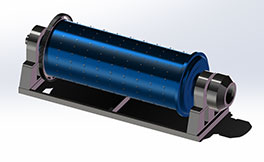
Ball Mills – for ore, slag, cement, and chemical grinding
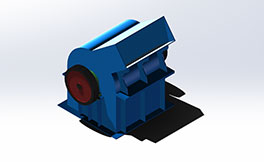
Crushers – for primary and secondary size reduction
We provide custom engineering, full manufacturing, installation guidance, commissioning support, and after-sales service for customers worldwide.
Summary
The titanium dioxide calcination rotary kiln production line in Yingkou, Liaoning, demonstrates Henan Hongke Heavy Machinery's ability to deliver specialized thermal processing equipment for the high-value chemical pigment industry. By integrating precise zone temperature control, continuous operation, and automated monitoring, the system produces consistent, high-quality TiO₂ pigment optimized for market requirements.
For titanium dioxide calcination, mineral processing, or other thermal treatment applications, contact Henan Hongke Heavy Machinery Co., Ltd.
Henan Hongke Heavy Machinery Co., Ltd.
Rotary Kilns | Rotary Dryers | Ball Mills | Crushers – Engineered for Real-World Results